Bass Fishing for Beginners: Largemouth 101
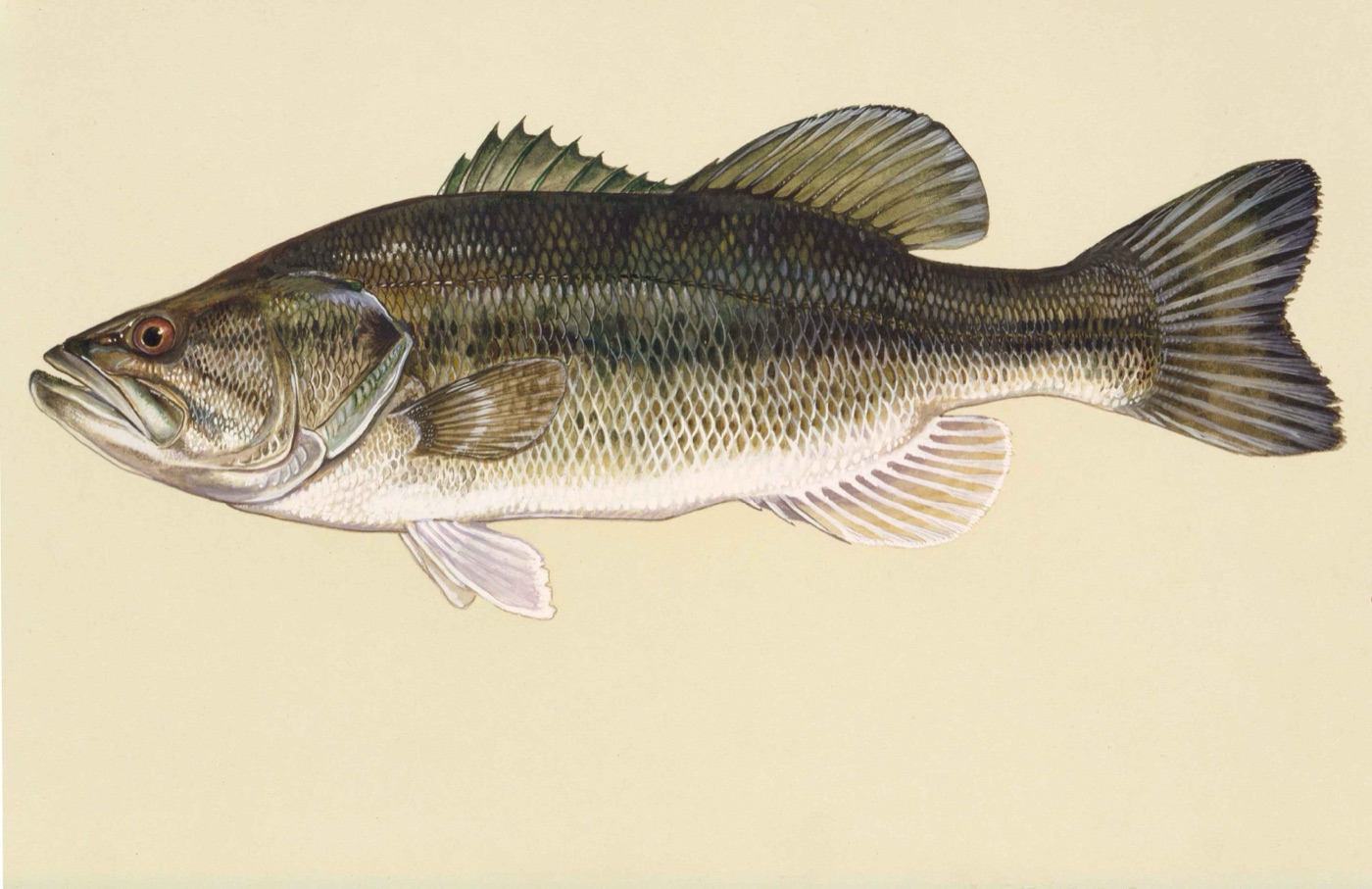
Largemouth bass are ambush predators that live around cover — weeds, logs, docks, rock — in warm, quiet water. Fish for them close to that cover, at dawn and dusk when they're most active, with lures that mimic what they're eating: soft plastics around vegetation, baitfish imitators in open water. Spring and fall are the generous seasons; summer sends them deep.
Key takeaways
- America's fish: Take Me Fishing calls the largemouth the most popular freshwater game fish in the US — famous for striking 'with explosive force.'
- Cover is the whole game: logs, rock ledges, vegetation and man-made structure — Texas Parks and Wildlife's list of where bass wait to ambush.
- They eat almost everything: fish and crayfish first, but Iowa's DNR has found frogs, worms, even small mammals and birds in bass stomachs.
- Missouri's field guide: most active at dawn and dusk — plan your sessions around the light.
- Seasons move them: spawn in shallow water each spring (around 60°F in Texas), deep and difficult in summer, aggressive fall feeding, deep again by the mid-50s°F.
- Match the lure to the prey and the water: soft plastics rigged weedless around vegetation, baitfish-style lures in open water, brighter colors in stained water.
Why everyone starts (and stays) with bass
Take Me Fishing states it flatly: the largemouth bass is the most popular freshwater game fish in the United States, and much of that popularity comes from its “willingness to strike a lure or bait with explosive force.” For a beginner, that temperament is the gift — bass are aggressive enough to forgive imperfect presentations, common enough to live in nearly every warm pond and reservoir, and strong enough to make every hookup feel like an event.
They’re also an honest teacher, because bass fishing’s core skill transfers to everything else: learning to read where a predator waits. Texas Parks and Wildlife notes that apart from humans, adult largemouth sit at the top of their aquatic food chain — and top predators behave in learnable ways.
Cover: the one-word strategy
If bass fishing had to be compressed into one instruction, it would be: fish the cover. TPWD’s species account is specific — largemouth seek protective cover such as logs, rock ledges, vegetation and man-made structures, preferring clear, quiet water — and explains why: they “hide among plants, roots or limbs to strike their prey.” This is an ambush hunter; open water is where it commutes, cover is where it works.
Take Me Fishing’s bass pages turn that into a search list for any lake: shallow areas with vegetation, brush or trees; piers, docks and pilings; sunken objects; weed beds. The practical habit for a beginner is casting past the target and bringing the lure alongside it — close enough that the ambush happens on your line. Reading water generalizes the skill; bass just make the lesson obvious.
What are they ambushing? Nearly anything. Adults feed mainly on fish and crayfish per TPWD, but Iowa’s DNR — calling bass “opportunistic foragers” — has documented frogs, worms, insects and even small mammals and birds in bass stomachs. Keep that list in mind; it is literally the lure catalogue.
The seasonal clock
Bass run on water temperature, and the agencies describe a four-season pattern worth memorizing.
Spring concentrates them shallow: spawning begins around 60°F in Texas waters, with males fanning nests in a few feet of water (depths vary — Missouri records nests from under a foot to fifteen feet). Shallow, visible, aggressive: the easiest season for a newcomer. Fish it responsibly — quick fights, prompt releases, and a check of your state’s current spawn-season rules.
Summer scatters them: Iowa’s DNR calls it the most difficult season — bass still eat but become “harder to find,” and Take Me Fishing explains where they went: deep water through the heat of the day, rising as evening cools. Summer bass fishing is dawn, dusk and depth.
Fall is the reward: Iowa’s DNR says bass “aggressively feed well into the fall months” and calls the fall bite possibly the easiest success of the year, with fish active after cool nights. Then, as water drops into the low-to-mid 50s°F, they slide deep again for winter. Our water temperature guide covers the mechanism behind the whole calendar.
Daily clock: Missouri’s field guide keeps it simple — most active at dawn and dusk. Iowa’s version: from half an hour before sunrise to two or three hours after, and again from half an hour before sunset.
Lures: categories, not brands
Every bass lure is an impersonation, and the agency guidance organizes the wardrobe by prey. Soft plastics — crayfish, frogs, lizards, worms — mimic creature prey, and their superpower for beginners is weedless rigging: hooks buried so they slide through the vegetation bass live in. Iowa notes nearly any soft plastic fishes across the standard rigs — Texas and Carolina rigs, wacky, drop shot — and our soft plastics guide goes deep on the category. Baitfish imitators — spoons, crankbaits, spinnerbaits — copy shad and shiners for water beside the cover.
Then let the water pick the details. Iowa’s clarity rule: brighter, more vibrant lures in stained or turbid water — and Take Me Fishing adds the sound dimension, recommending a rattling crankbait when visibility drops, so bass find the lure with their lateral line instead of their eyes. Lure color logic is its own guide here.
Tackle-wise, a beginner needs nothing exotic: the medium spinning combo agencies recommend, spooled per our line guide, covers everything above; a baitcaster can wait until heavy cover demands it.
A beginner’s honest week-one plan
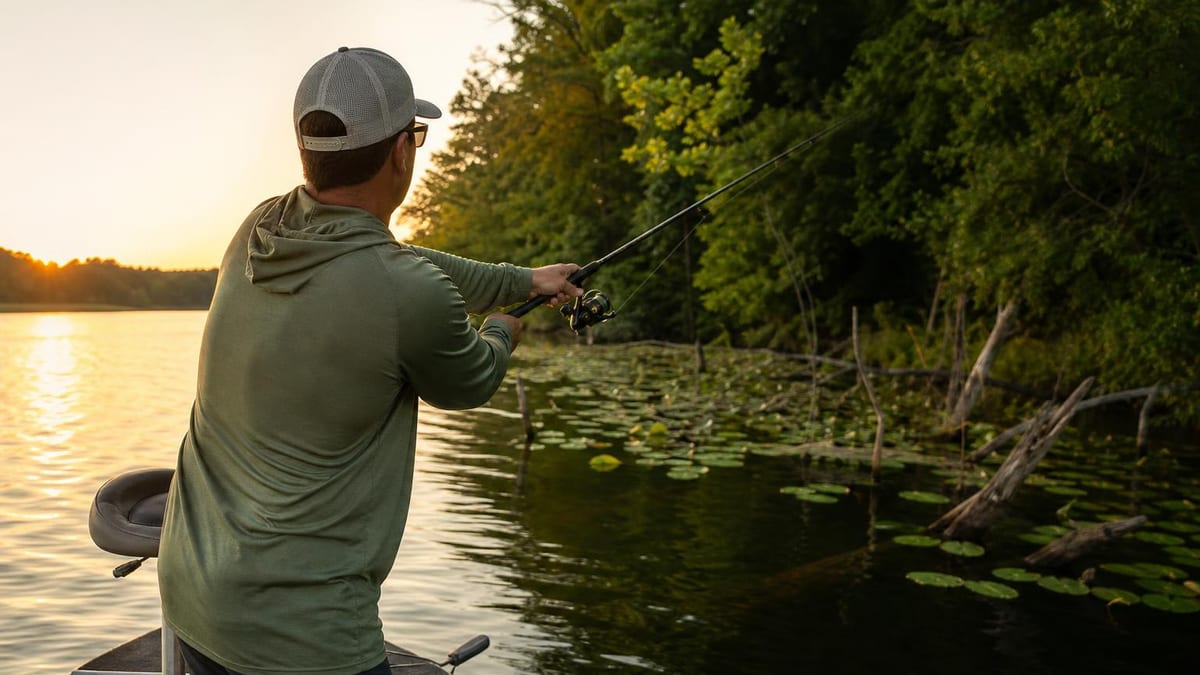
Pick warm, quiet water with visible cover. Arrive for one of the day’s edges — dawn if you can, dusk if you can’t. Rig a soft plastic weedless, cast past every log, dock corner and weed edge you can reach, and retrieve alongside the cover, pausing often. When the water is stained, go brighter and louder; when it’s clear, go subtle. Log what worked — where, when, on what — because bass patterns repeat, and the angler who writes them down owns the lake by autumn. Largemouth or smallmouth, the habit is the same; the largemouth is simply the more forgiving professor.
Frequently asked questions
Where do I find bass in a lake?
Find the cover, then fish tight to it. Texas Parks and Wildlife lists what largemouth seek: logs, rock ledges, vegetation and man-made structures, in clear, quiet water. Take Me Fishing's bass pages repeat the pattern — shallower areas of ponds, lakes and slow rivers with vegetation, brush, trees or structure, plus piers, docks and sunken objects. A featureless bank is a commute; anything that breaks the water's uniformity is a potential ambush point, because that's how this fish hunts.
What is the best time of day to catch bass?
Low light, by agency consensus. Missouri's Department of Conservation states the species is most active at dawn and dusk, and Iowa's DNR frames the general fishing window as roughly 30 minutes before sunrise to two or three hours after, with another bite starting half an hour before sunset. Summer sharpens the pattern: Take Me Fishing notes fish spend hot days deep and rise as waters cool toward dark. Fish the edges of the day and you fish the bass's schedule.
What lures should a beginner start with for bass?
Think in categories that copy prey, not in brand names. The verified guidance: soft plastic crayfish, frogs and lizards mimic real creature prey and can be rigged weedless for fishing in vegetation; spoons and crankbaits imitate shad and other baitfish; and Iowa's DNR notes nearly any soft plastic works across rigs like the Texas rig, Carolina rig, wacky and drop shot. Water clarity picks the color — Iowa recommends brighter, more vibrant lures in stained or turbid water, and a rattling bait helps bass find your lure when they can't see it.
When do bass spawn, and why does it matter?
Spring, when the shallows warm — in Texas Parks and Wildlife's account, spawning begins around 60°F, with males building nests in a few feet of water (nest depths vary by water; Missouri records everything from under a foot to fifteen feet). It matters because spring concentrates bass shallow and visible — the easiest season to find them — and because those beds are next year's fishery. Handle spring fish quickly and release them promptly; some states protect the spawn with special regulations, so check your agency's current rules.
Are bass good to eat, or should I release them?
Both are legitimate — largemouth are legal table fare where regulations allow — but bass fishing runs on a strong release culture, and the biology supports it: Texas Parks and Wildlife notes that apart from humans, adult largemouth are the top predators in their ecosystem, so big bass do outsized work keeping a lake balanced. If you release, do it well — wet hands, minimal air, quick return. Our catch-and-release guide covers the agency playbook.
Sources
- Largemouth Bass (Micropterus salmoides) — Texas Parks & Wildlife Department. Accessed August 13, 2026.
- Bass Fishing Tips — Take Me Fishing (Recreational Boating & Fishing Foundation). Accessed August 13, 2026.
- Largemouth Bass species profile — Take Me Fishing (Recreational Boating & Fishing Foundation). Accessed August 13, 2026.
- Largemouth Bass — Fish Iowa — Iowa Department of Natural Resources. Accessed August 13, 2026.
- Largemouth Bass — Field Guide — Missouri Department of Conservation. Accessed August 13, 2026.
- Fishing in Different Seasons — Take Me Fishing (Recreational Boating & Fishing Foundation). Accessed August 13, 2026.
How we choose sources: sources policy.
More in this series
Know when it's worth going.
Fishing Club AI turns live weather, pressure and moon data into a simple bite forecast for your spot — so the skills you practise get used on the right day.
Get the App