Fish Species Guides
Know how to identify, find, and catch America's most popular gamefish — with the size, habitat, and tactics that actually work.
What's in each profile
Every profile follows the same structure, so you can compare species instead of decoding different write-ups: identification and look-alikes, typical size and weight range, where the fish holds through the season, the baits and tactics that work on it, and how it rates as a game fish and on the table. Sources are agency and research publications, listed on each page.
How to browse
The collection splits by water below — 28 freshwater and 28 saltwater profiles, with euryhaline species like striped bass appearing in both because they genuinely live in both. If you want the categories explained rather than the fish listed, start with how types of fish are grouped — by water, by migration, by family and by state law.
Then take it to the water: fishing guides · knots · rigs · fishing conditions
Freshwater
Alligator Gar
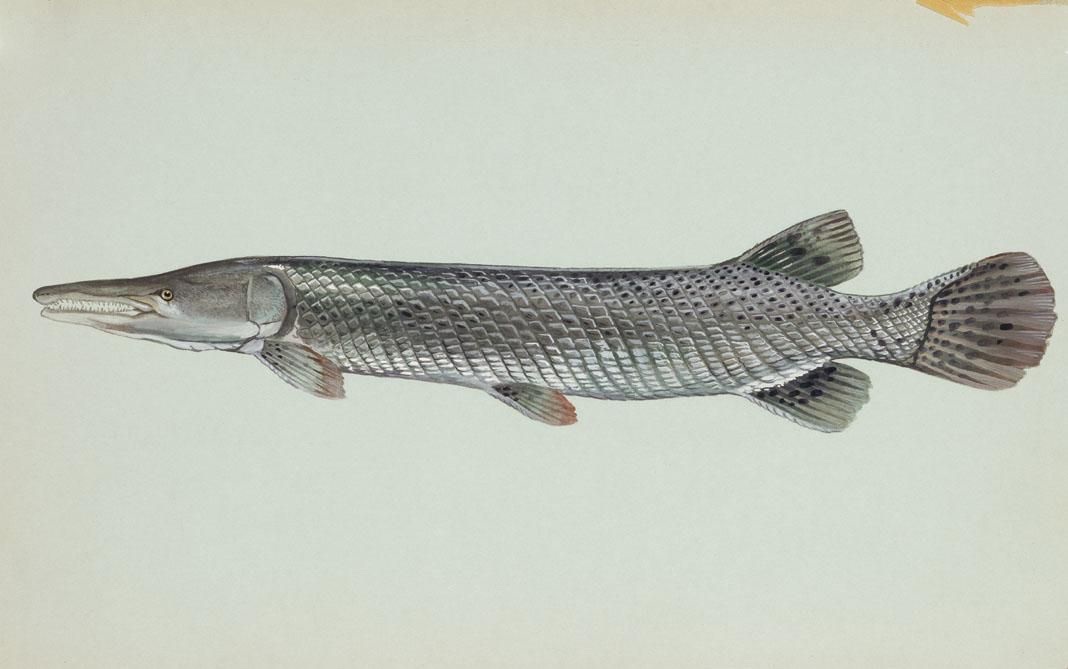
Alligator gar is a giant, armor-plated survivor from the age of dinosaurs, breathing air through a lung-like swim bladder and carrying a double row of teeth in its broad, alligator-like snout.
Black Crappie
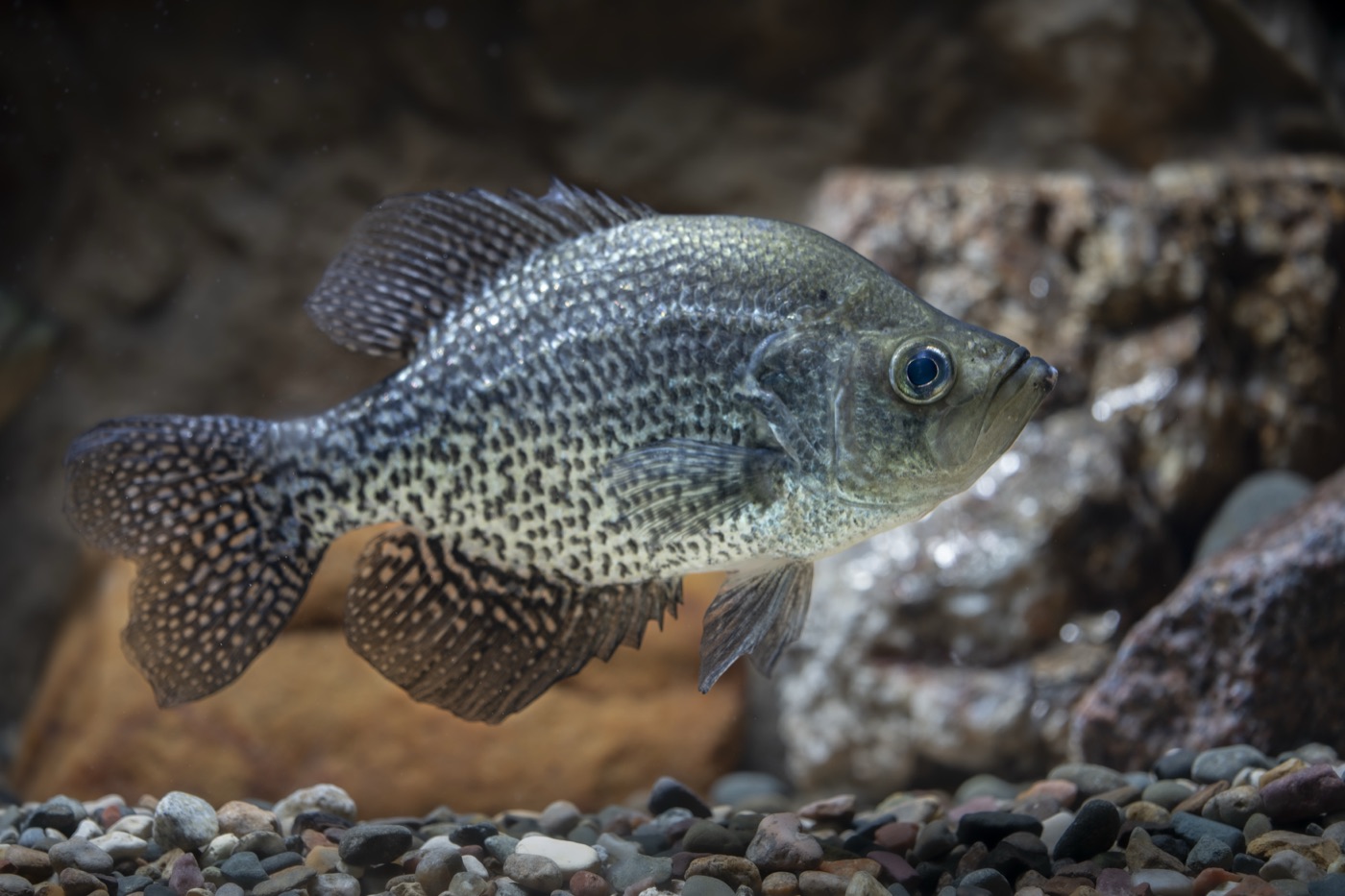
Black crappie is a deep-bodied panfish of the sunfish family, marked by irregular black speckles scattered across a silvery-green body.
Blue Catfish
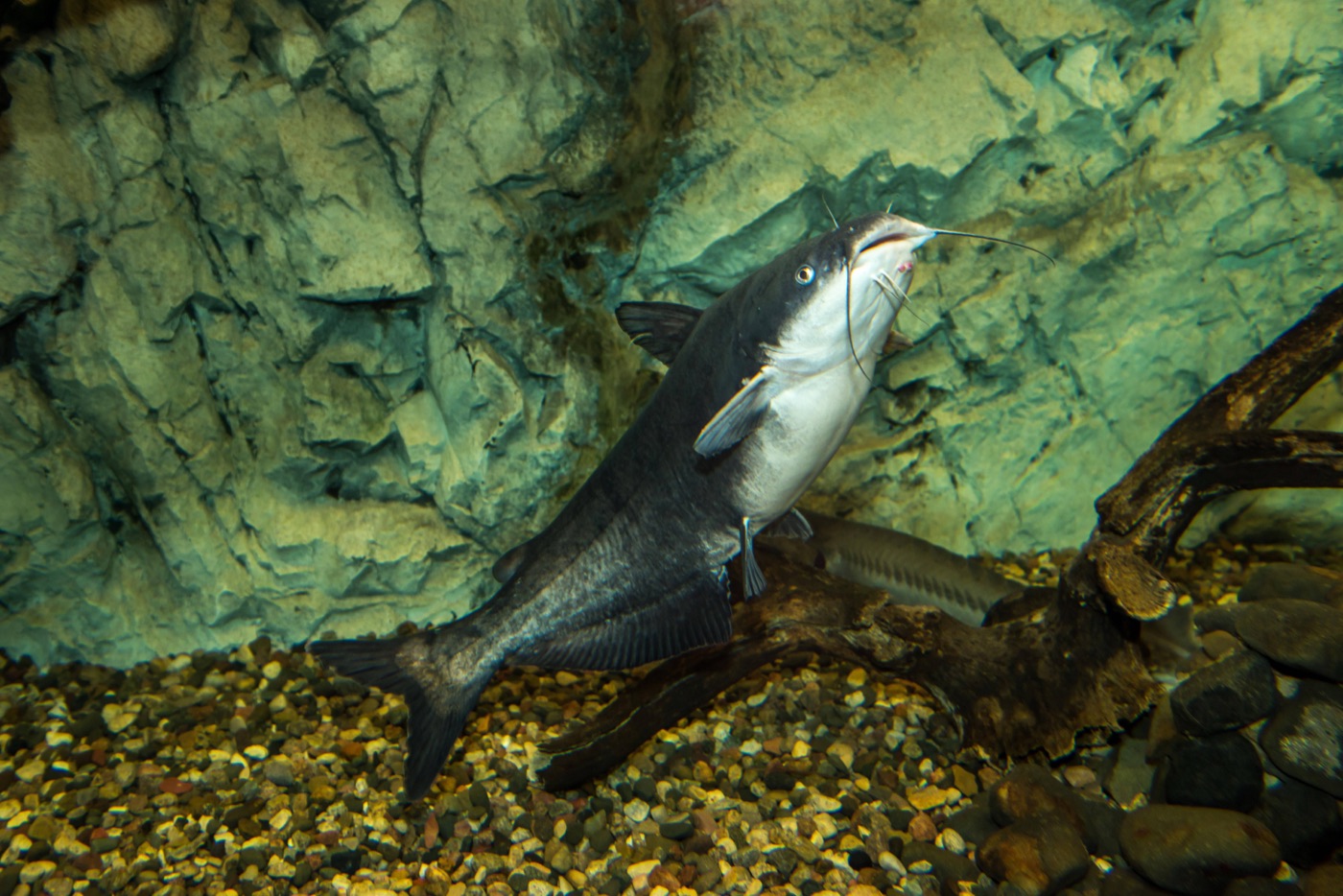
Blue catfish is the largest catfish species in North America, a scaleless river giant with a slate-blue body and a deeply forked tail.
Bluegill
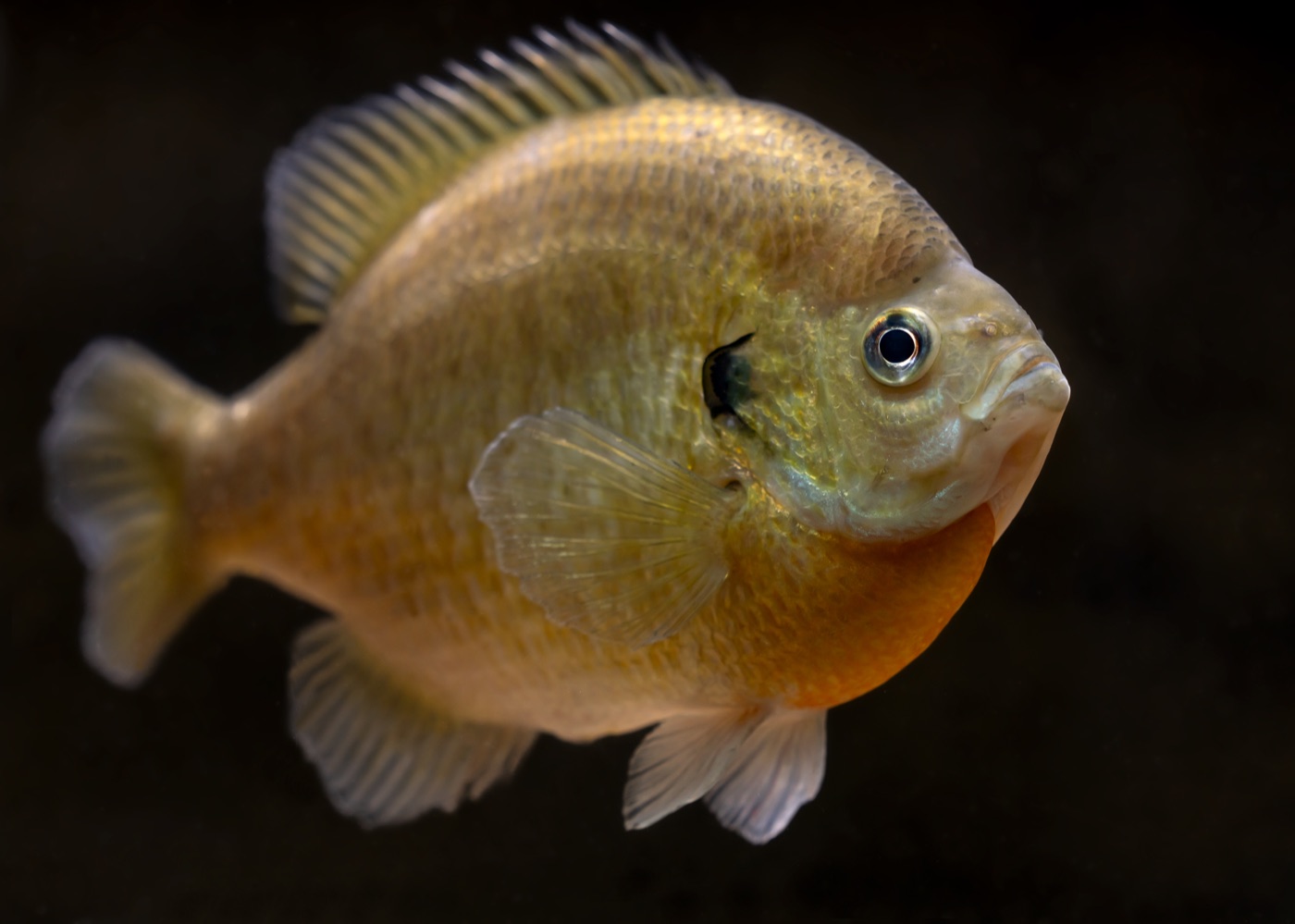
Bluegill is a small, deep-bodied panfish of the sunfish family, named for the blue sheen on its gill cover and lower jaw.
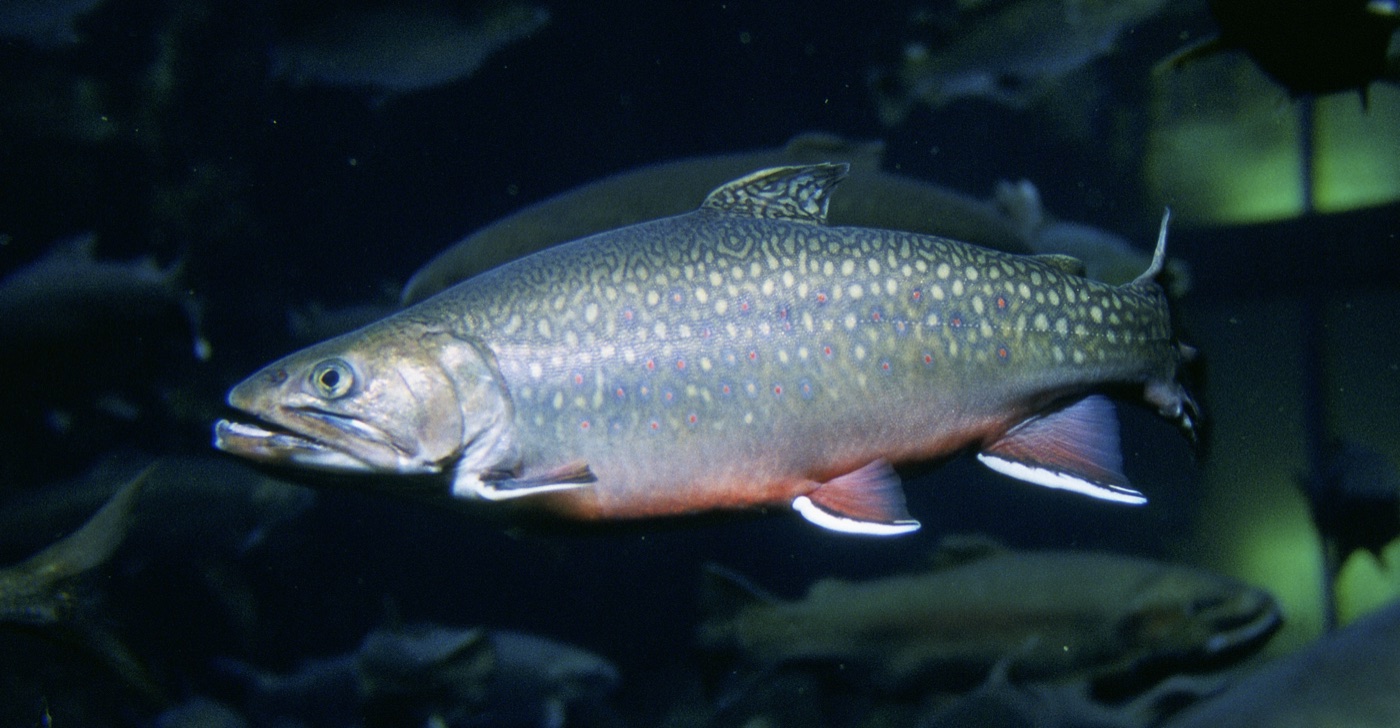
Brook Trout
Brook trout is a small char of the salmon family, marked by pale worm-like markings on the back and red spots ringed with blue along the flanks.
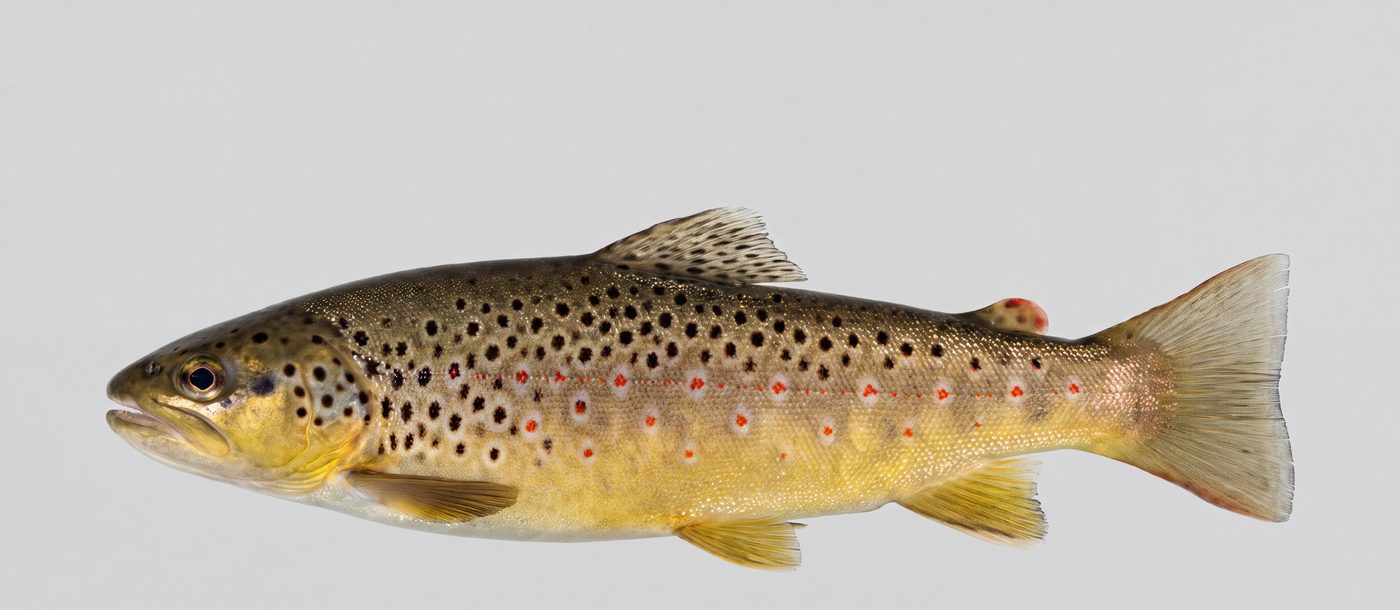
Brown Trout
Brown trout is a European trout introduced across North America, identified by large dark spots ringed with pale halos, often mixed with red or yellow spots, and a squared tail carrying few or no spots.
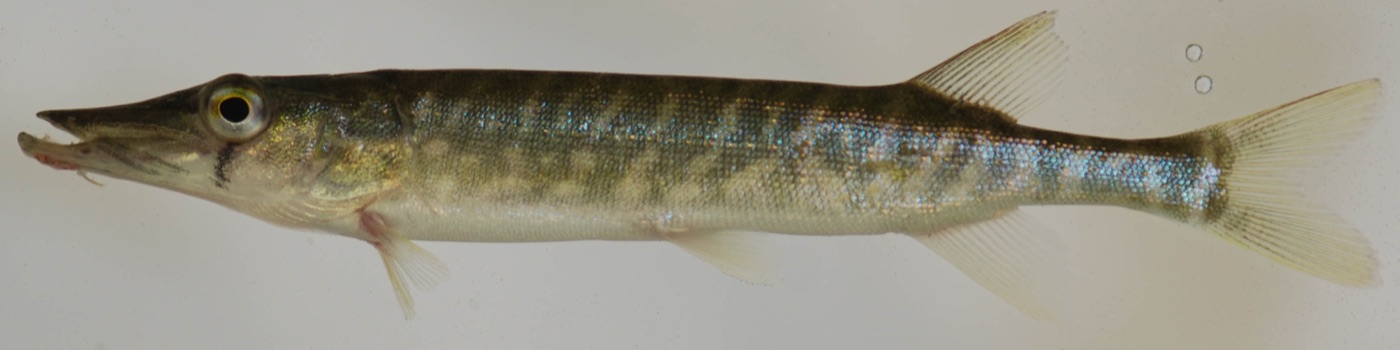
Chain Pickerel
Chain pickerel is the pike family's ambush hunter of weedy shallows, named for the dark interconnecting lines along its flanks that resemble the links of a chain.
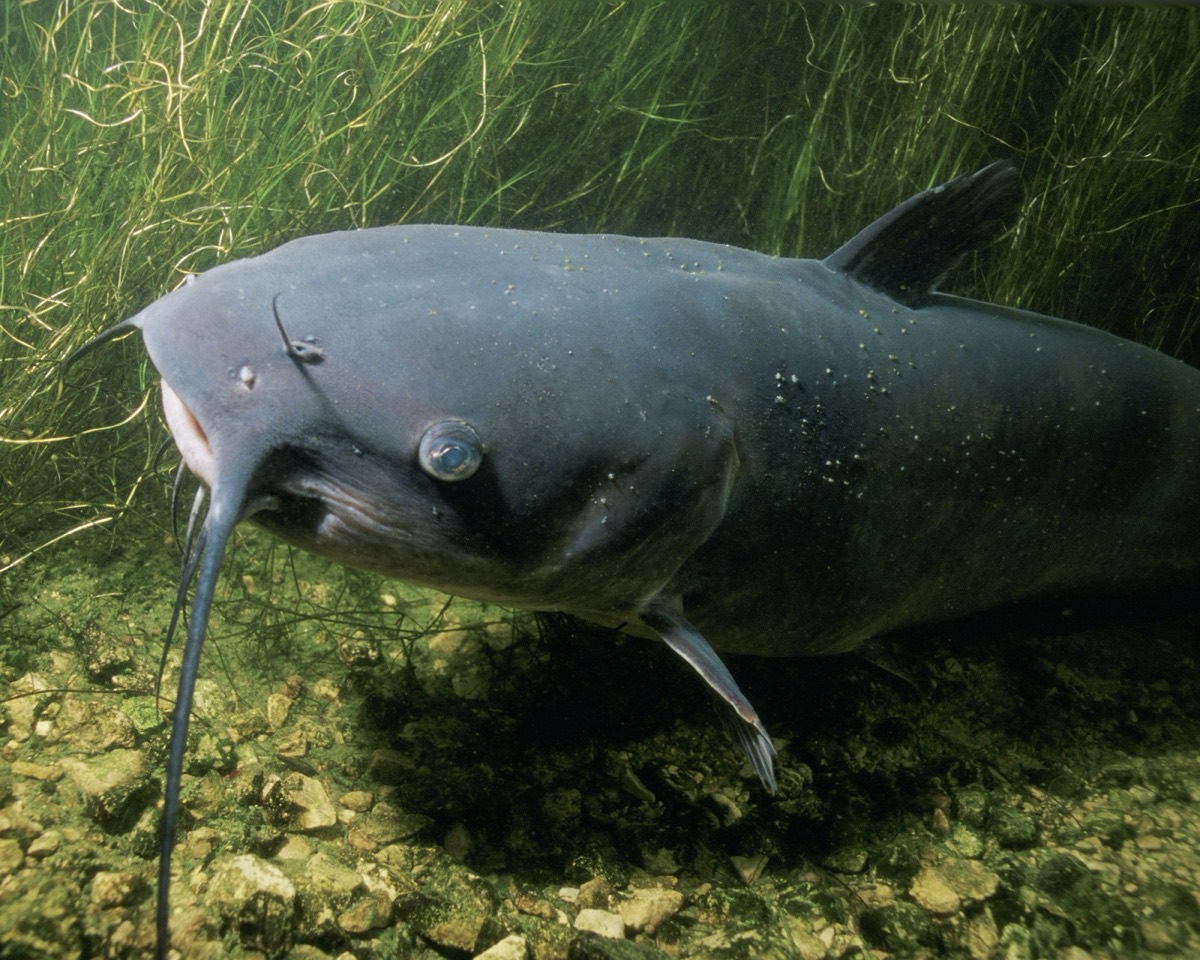
Channel Catfish
Channel catfish is a large, scaleless freshwater fish of the North American catfish family, distinguished by a deeply forked tail and dark scattered spots.
Chinook Salmon
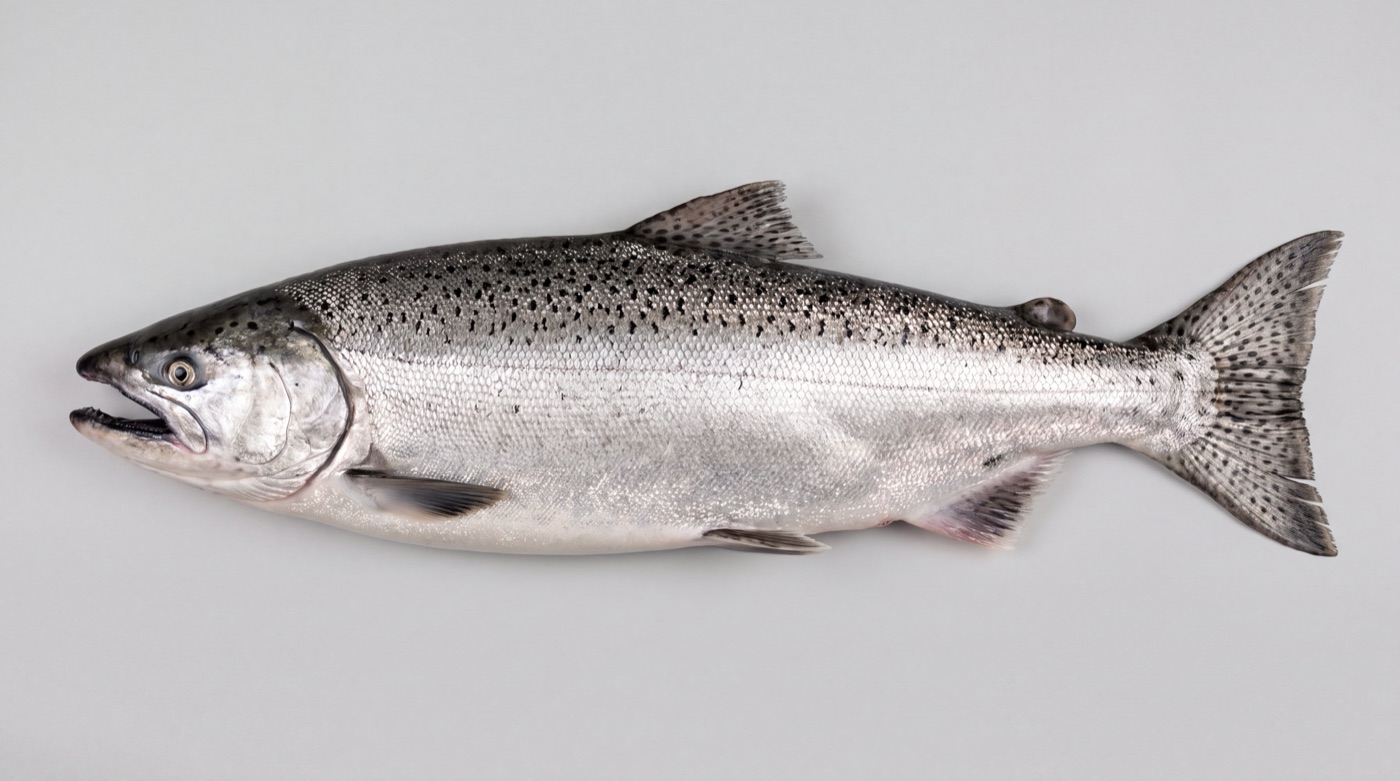
Chinook salmon is the largest of the Pacific salmon, identified by black spots across both lobes of its tail and by the black gums at the base of its lower teeth that earned it the nickname blackmouth.
Coho Salmon
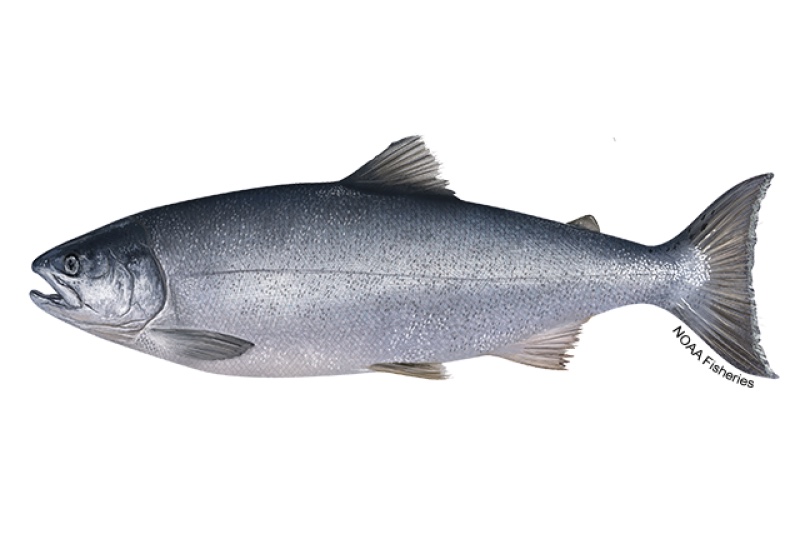
Coho salmon is a mid-sized Pacific salmon separated from the larger chinook by black spots on the upper lobe of the tail only, and by the pale gums at the base of its lower teeth.
Common Carp
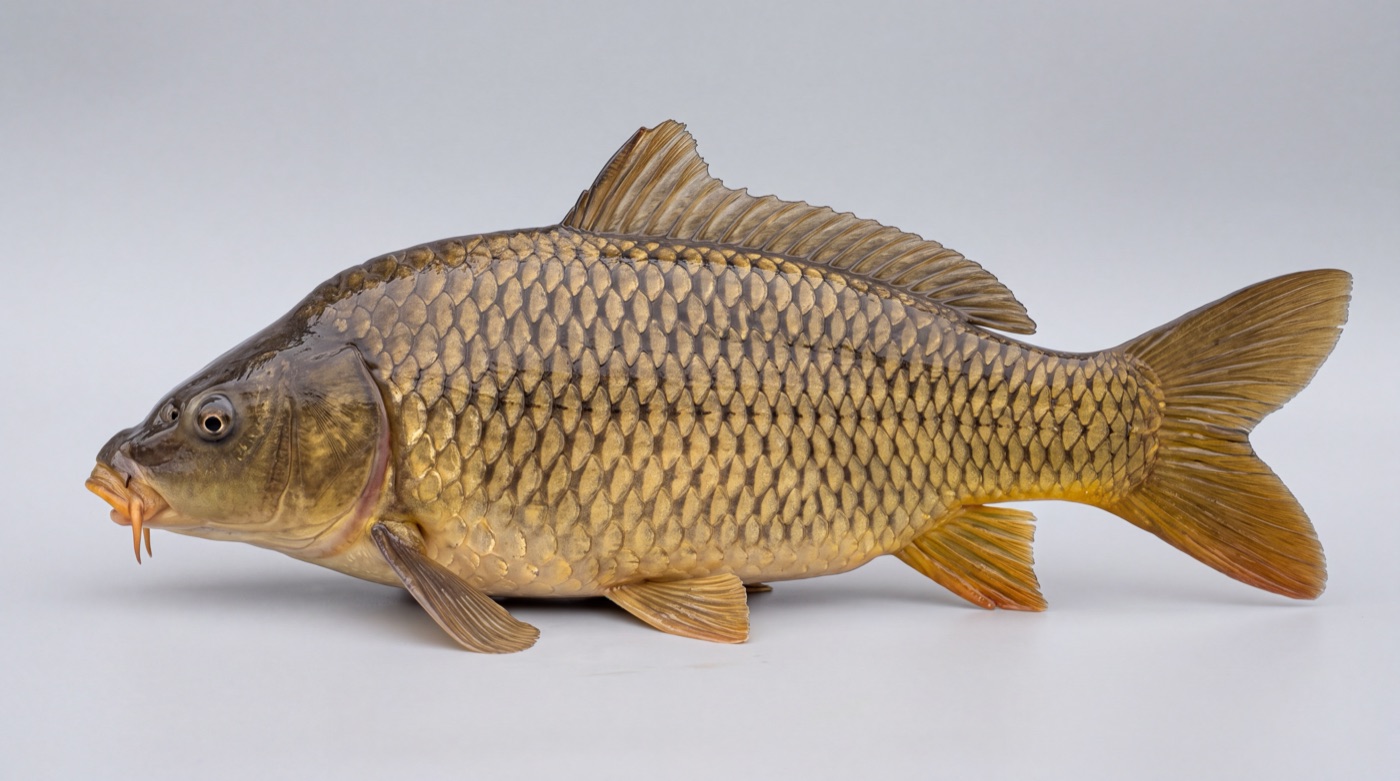
Common carp is a heavy-bodied, brassy-scaled fish of the minnow family, identified by the two pairs of barbels on its upper jaw and known equally as a hard-fighting sport fish and an ecological problem.
Cutthroat Trout
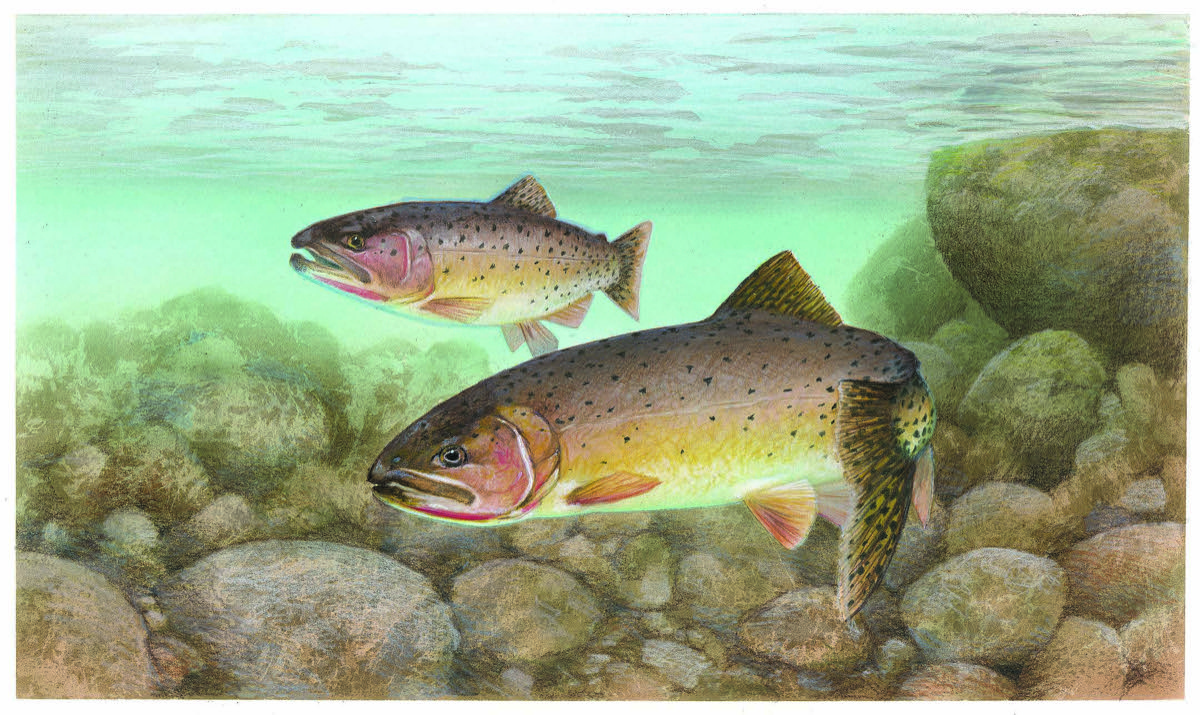
Cutthroat trout is the native trout of the American West, named for the vivid red slashes under each jaw — and unlike the Pacific salmon it shares a genus with, it survives spawning to spawn again.
Flathead Catfish
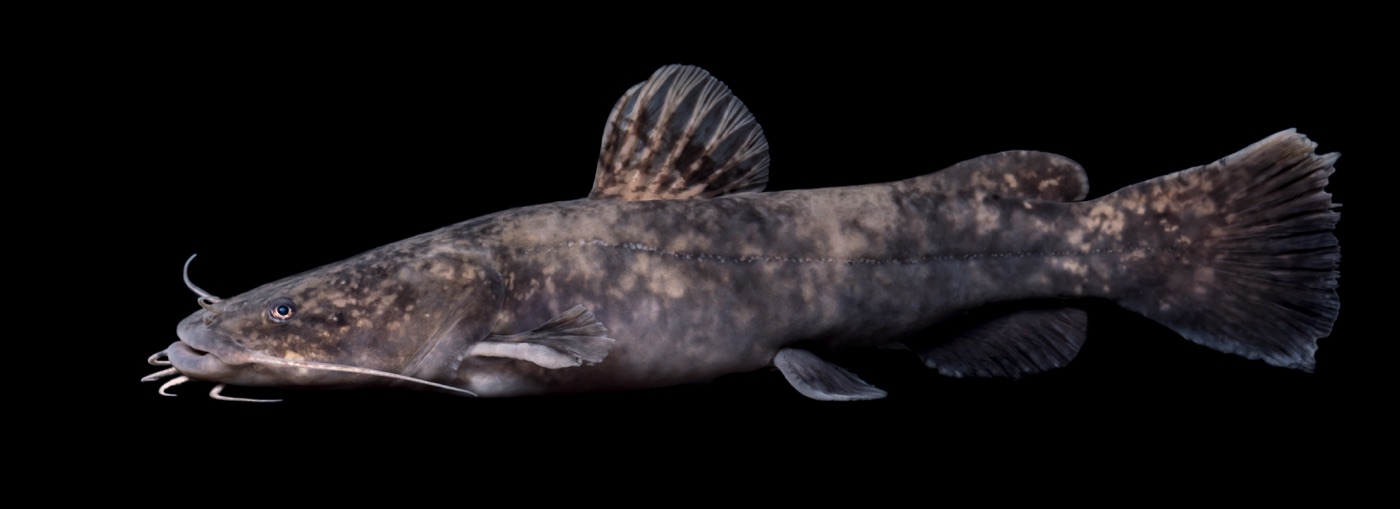
Flathead catfish is a large, solitary river predator distinguished by a broad flattened head, a protruding lower jaw, and a squared tail.
Lake Trout
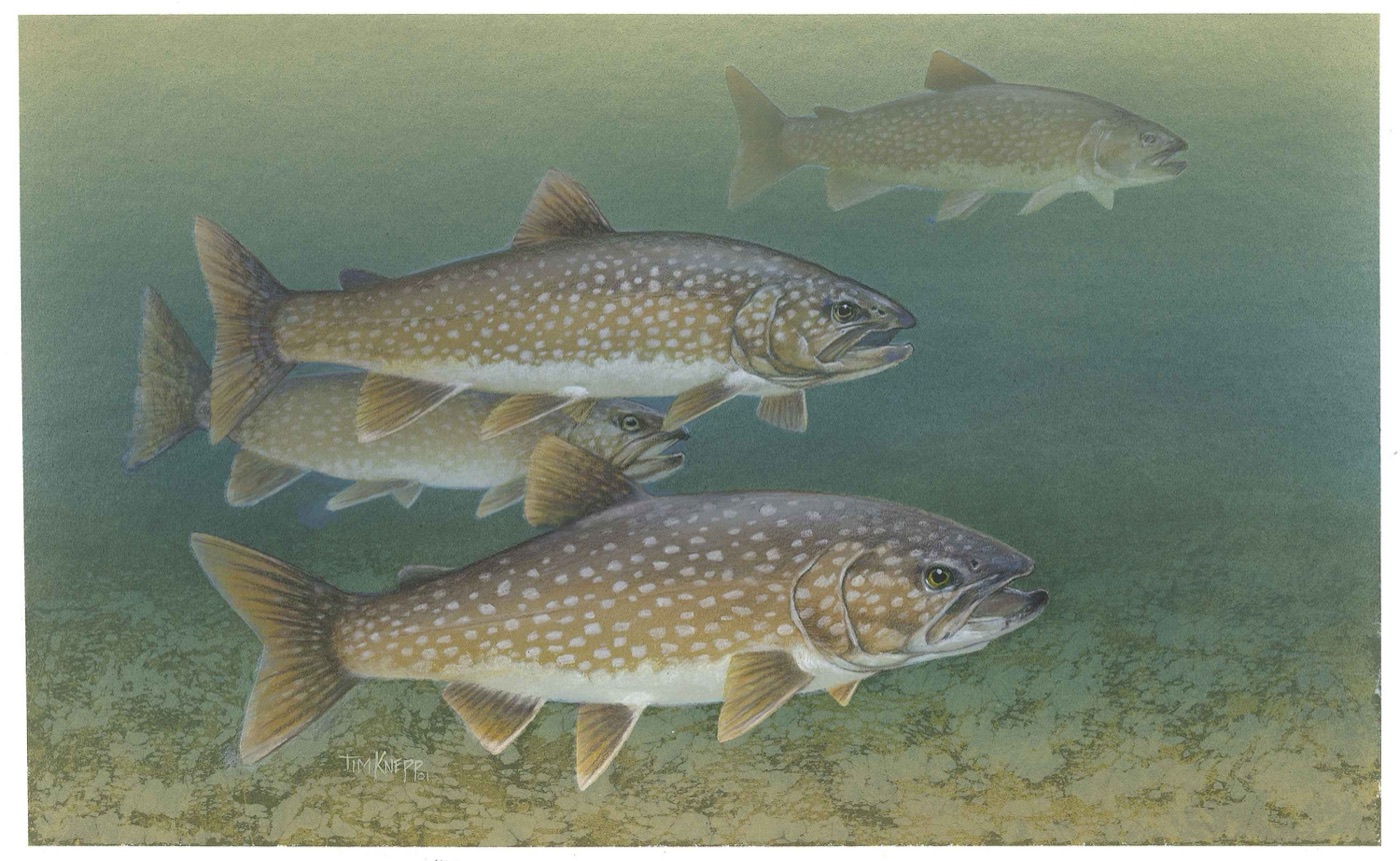
Lake trout is the largest char of the salmon family, a deep, cold-water fish marked by pale spots on a dark body and a deeply forked tail.
Largemouth Bass
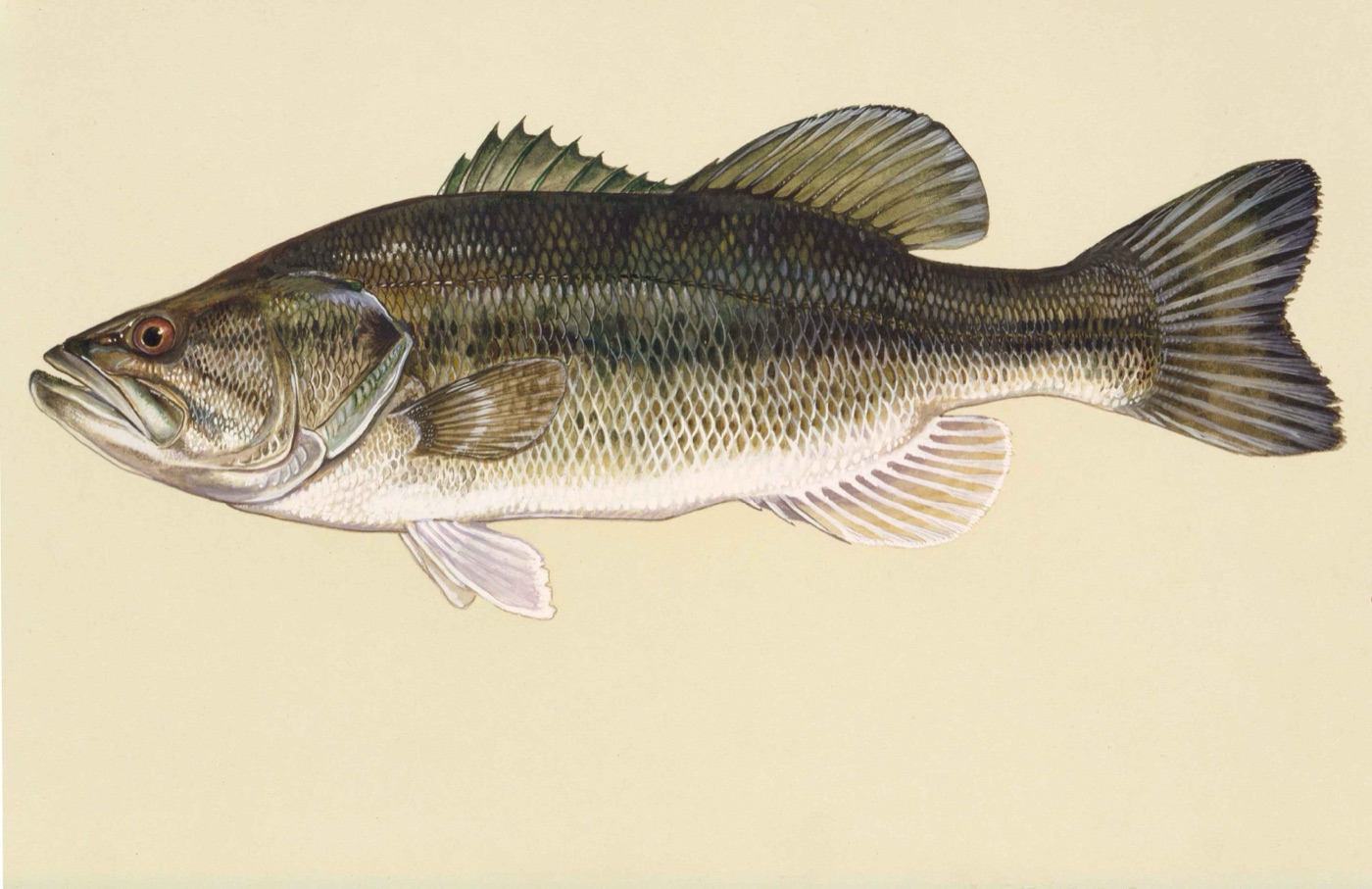
Largemouth bass is a large freshwater predatory fish of the sunfish family, distinguished by an upper jaw that extends past the rear edge of the eye.
Muskie
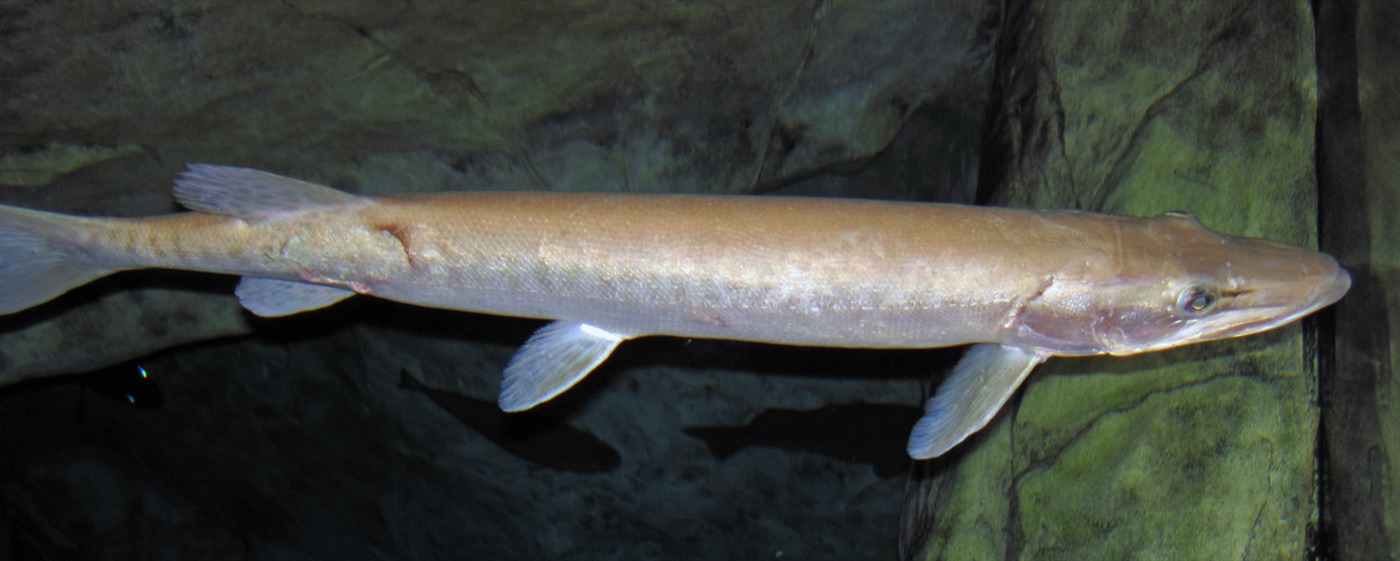
Muskie is the largest member of the pike family, a long, toothy freshwater predator renowned as one of the hardest gamefish to catch.
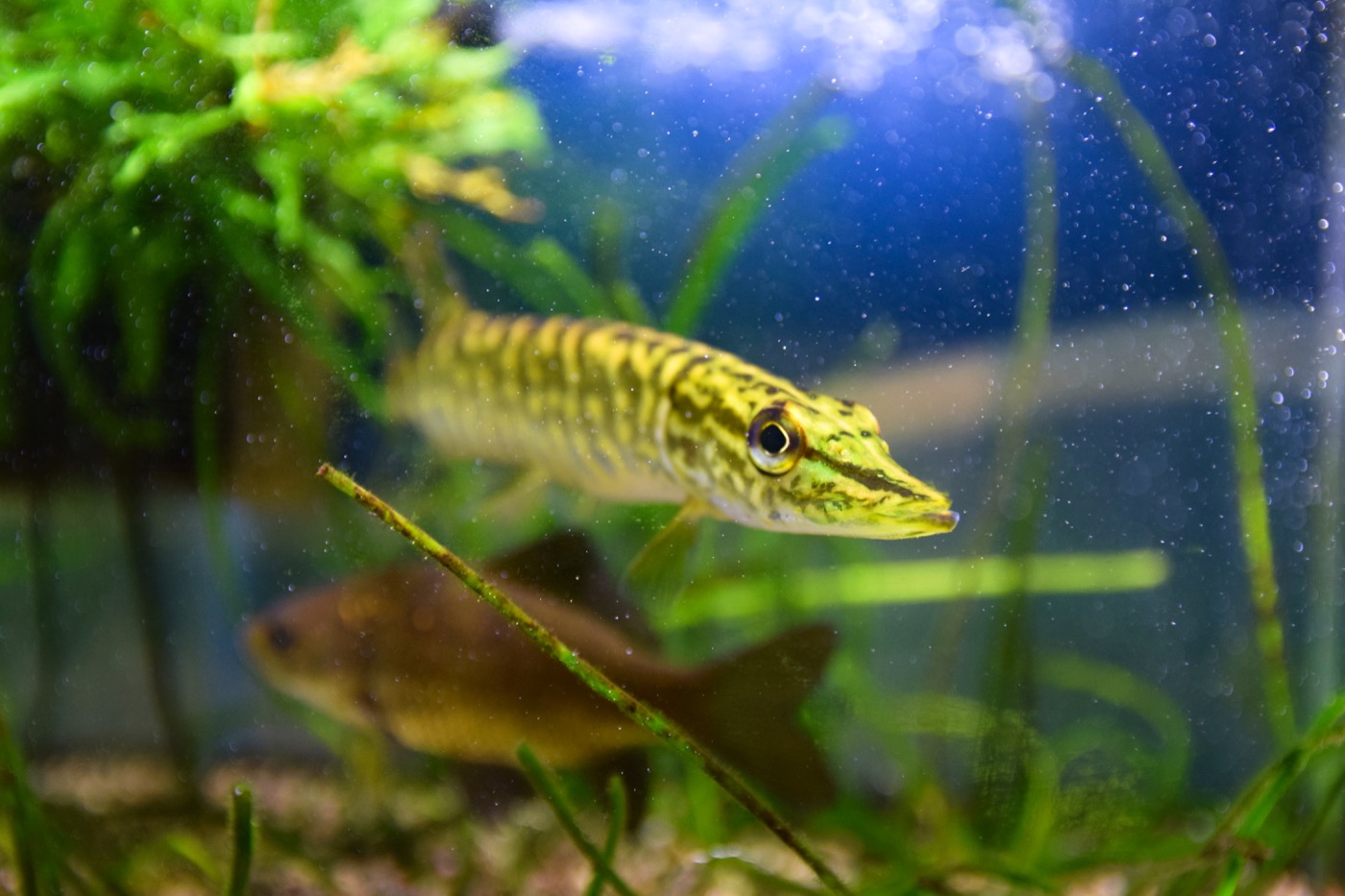
Northern Pike
Northern pike is a long, aggressive freshwater predator of the pike family, marked by light bean-shaped spots scattered across a dark green body.
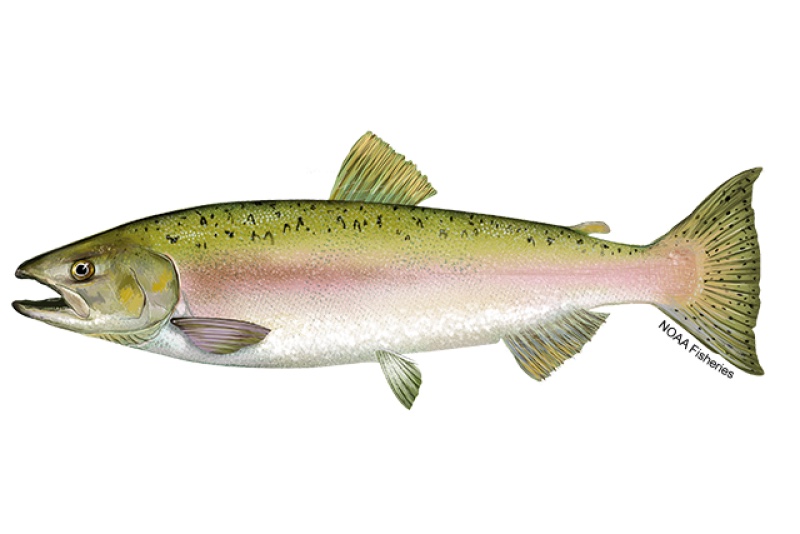
Pink Salmon
Pink salmon is the smallest and most abundant Pacific salmon, locked to a strict two-year life cycle that splits every river's fish into genetically separate odd-year and even-year populations.
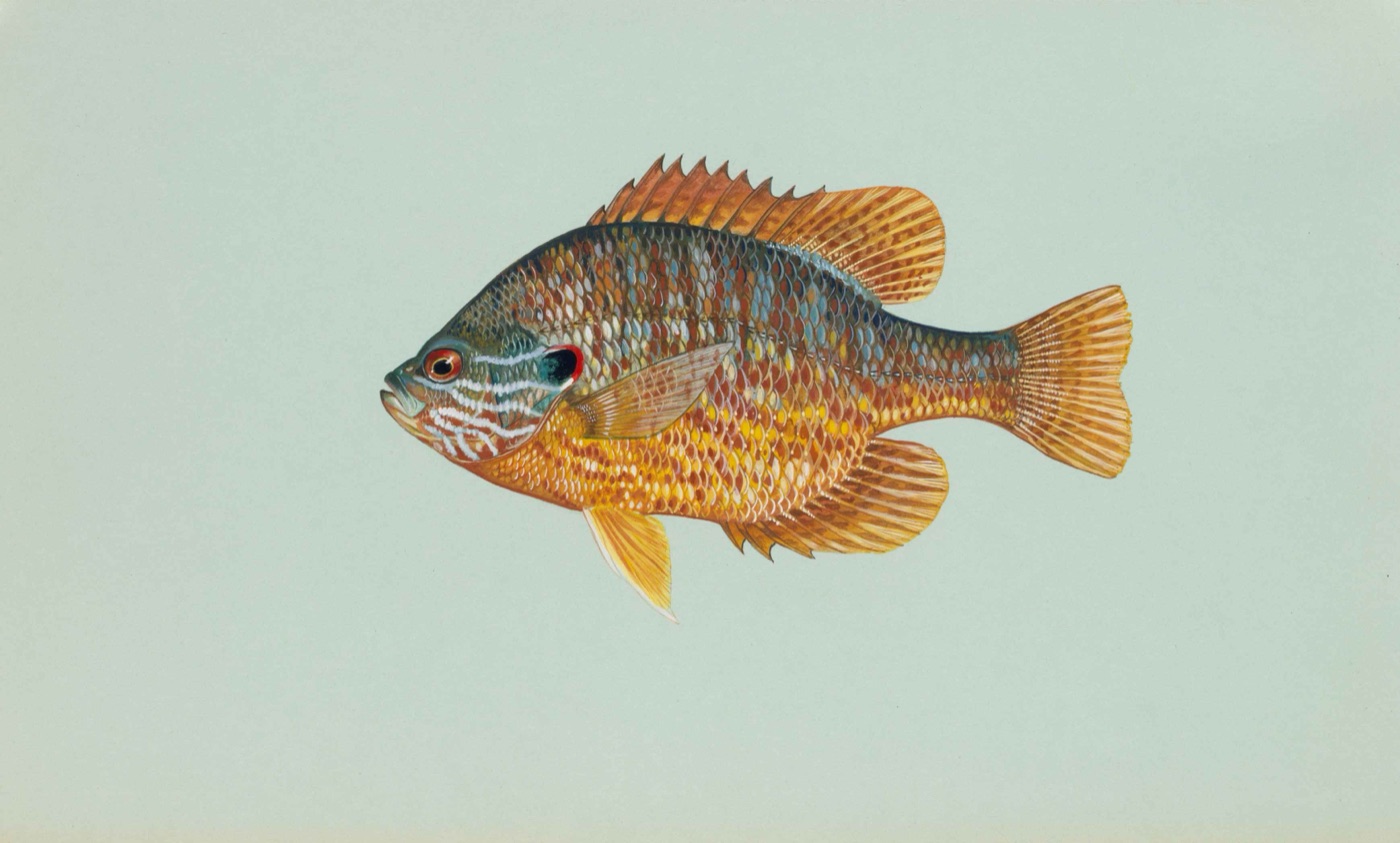
Pumpkinseed
Pumpkinseed is the most colourful of the common sunfish, told from a bluegill by the orange-red spot on its black ear flap and the wavy blue lines across its cheeks.
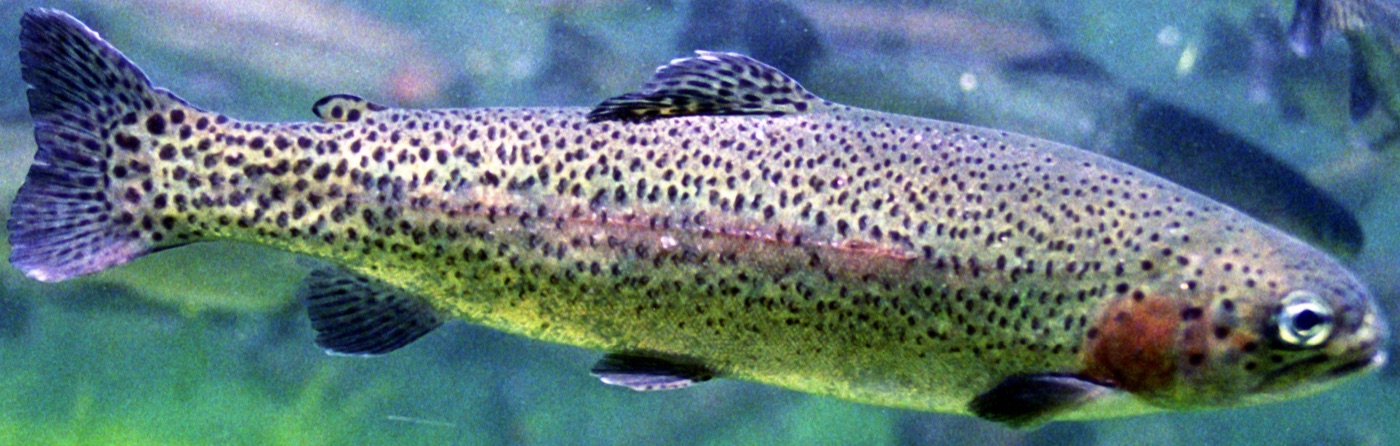
Rainbow Trout
Rainbow trout is a cold-water fish of the salmon family, recognized by the broad pink-to-red stripe running along each silvery flank.
Sheepshead
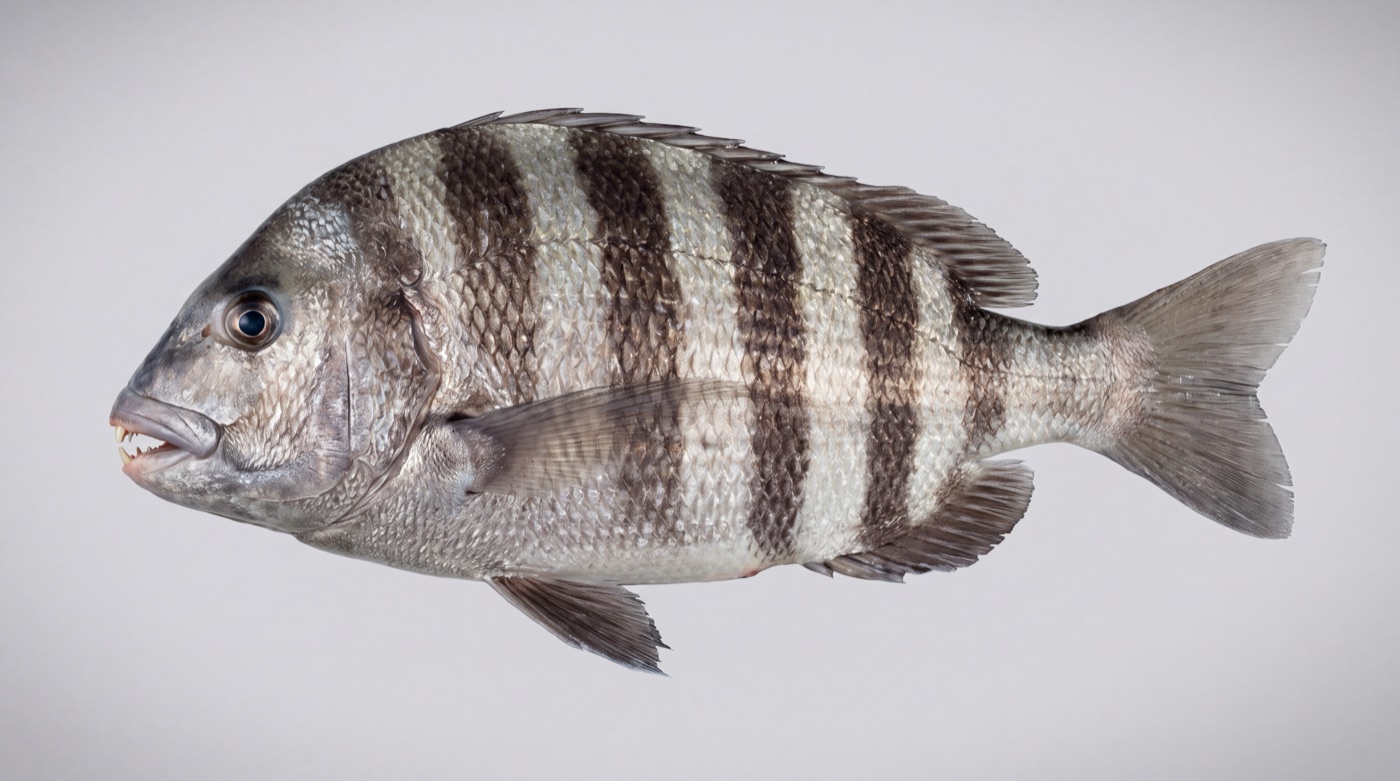
Sheepshead is a stout, deep-bodied member of the porgy family, instantly known by the bold vertical black bars along its flank and the disconcertingly human-looking teeth at the front of its jaws.
Smallmouth Bass
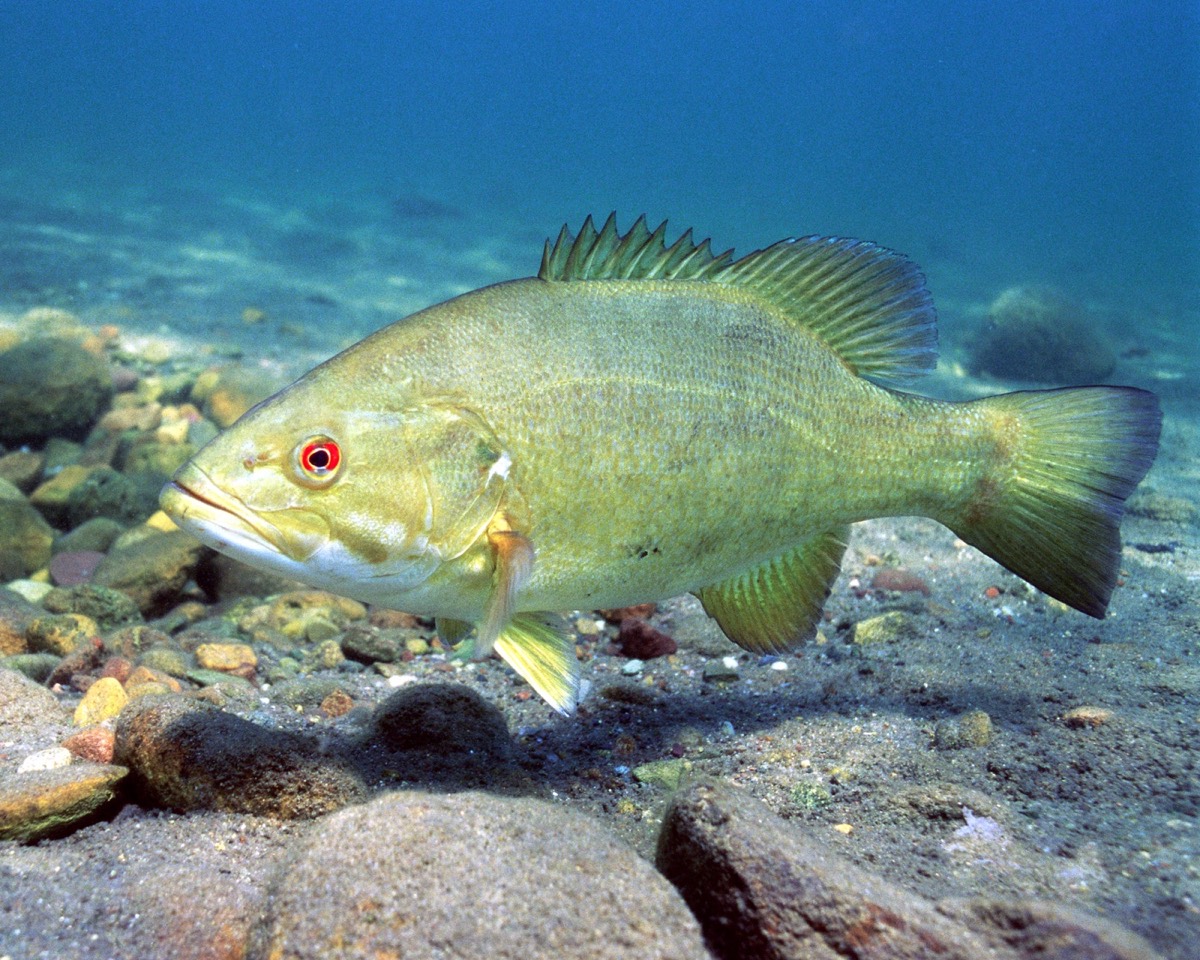
Smallmouth bass is a bronze-colored freshwater gamefish of the sunfish family, prized for a fighting strength that far exceeds its modest size.
Sockeye Salmon
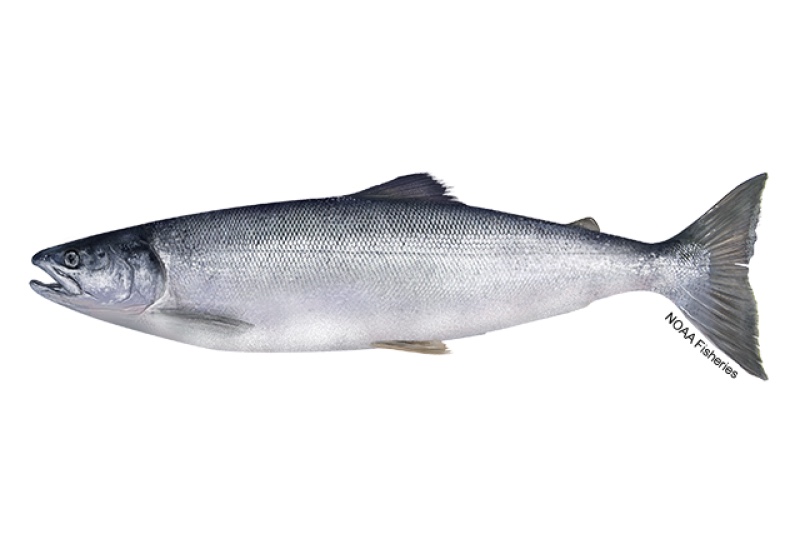
Sockeye salmon is the Pacific salmon of the lakes — a plankton-feeder whose spawning transformation, bright red body under a green head, is the most dramatic in the family.
Spotted Bass
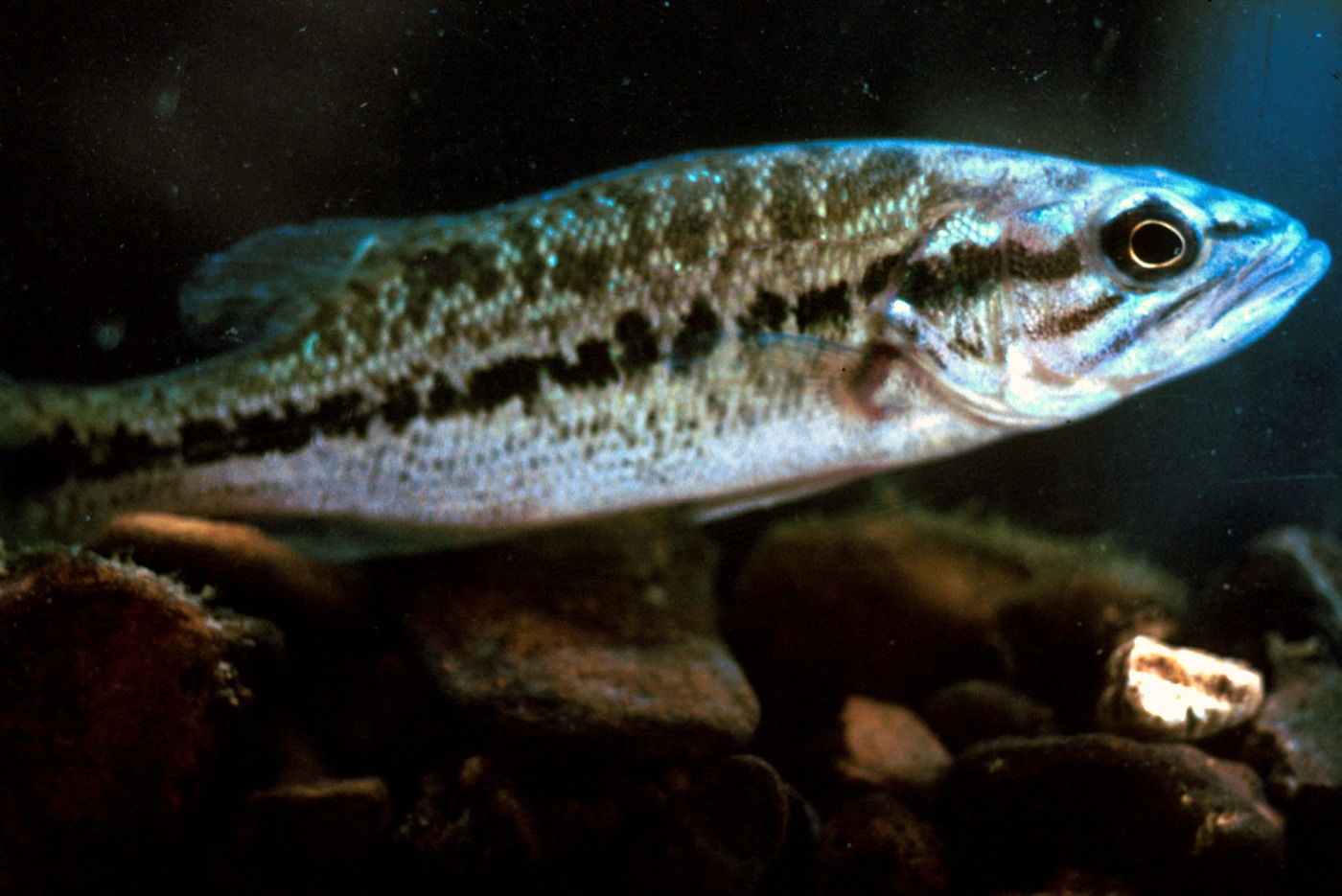
Spotted bass is the black bass of moving water, named for the rows of dark spots along its lower sides and told from a largemouth by a jaw that stops at the eye and clearly connected dorsal fins.
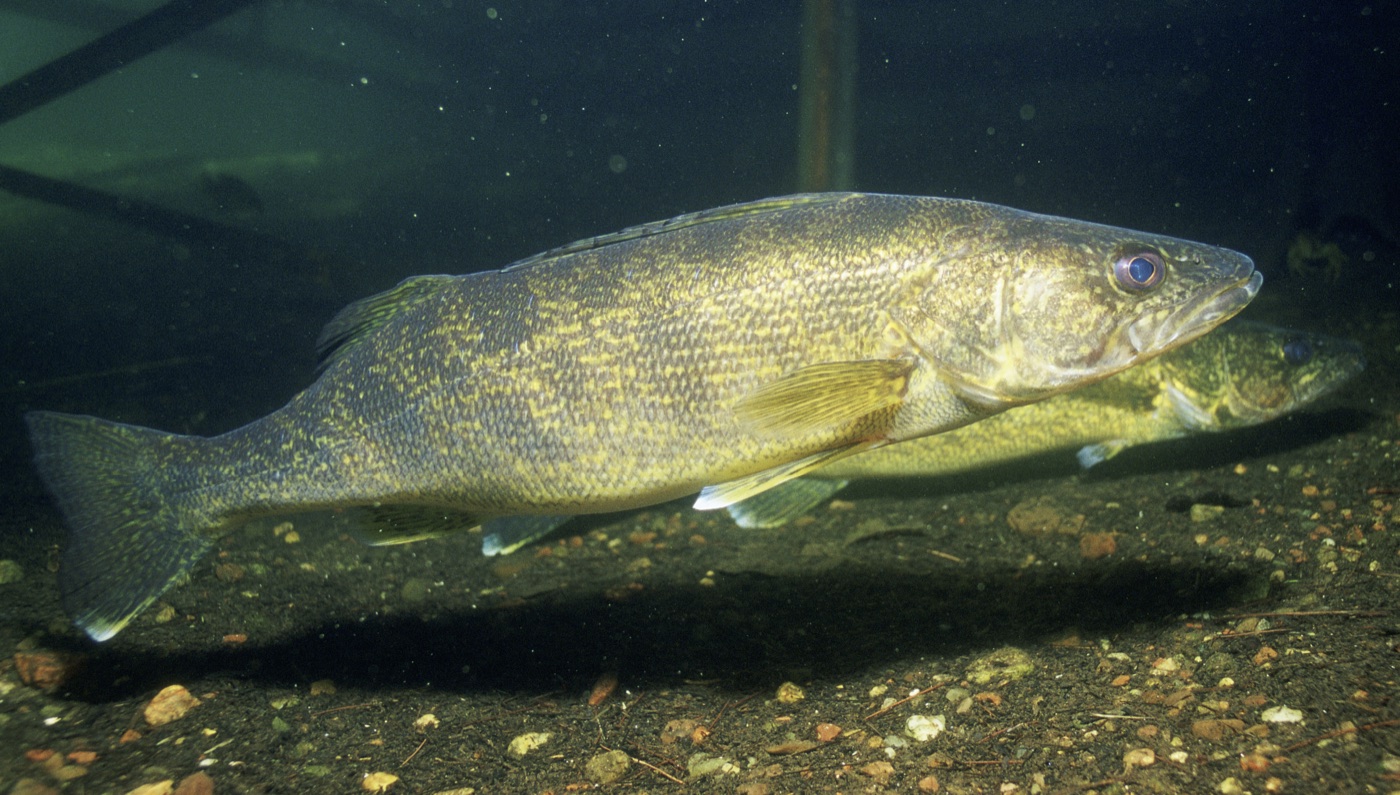
Walleye
Walleye is a large freshwater predator of the perch family, named for its cloudy, reflective eyes that let it hunt in low light.
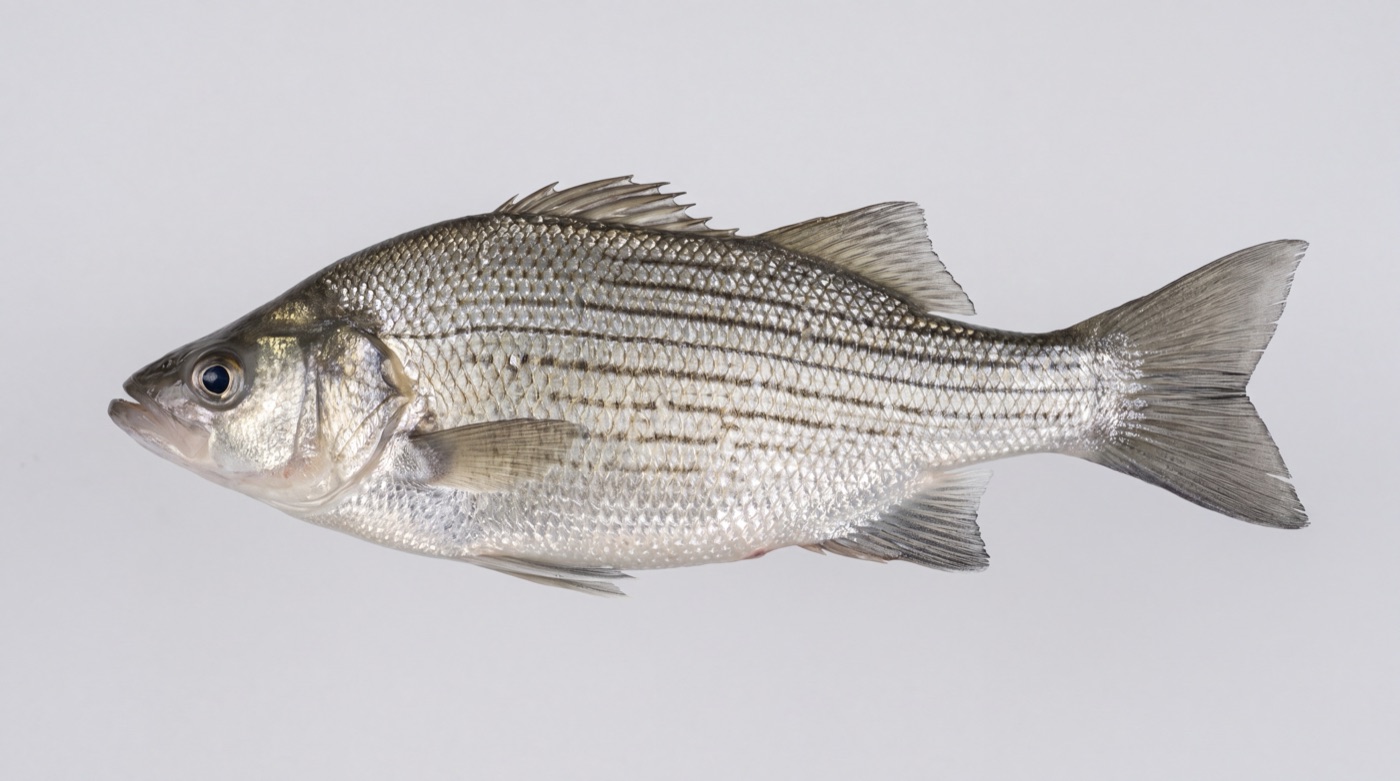
White Bass
White bass is a fast-growing, hard-schooling open-water predator of the temperate bass family, silver-sided with broken dark stripes and a single tooth patch on the tongue that separates it from its larger relatives.
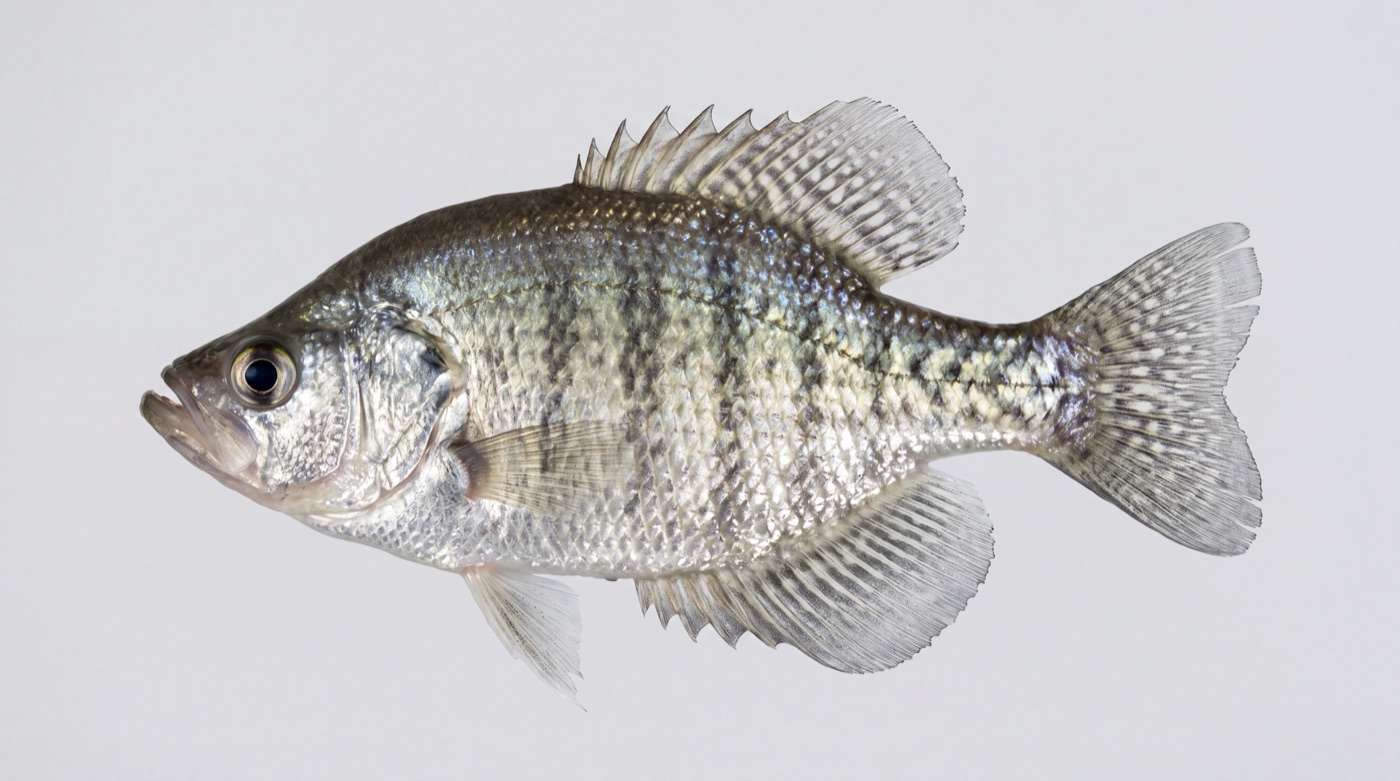
White Crappie
White crappie is a deep-bodied panfish of the sunfish family, separated from its black crappie cousin by the faint vertical bars along its flanks and a dorsal fin that usually carries six spines rather than seven or eight.
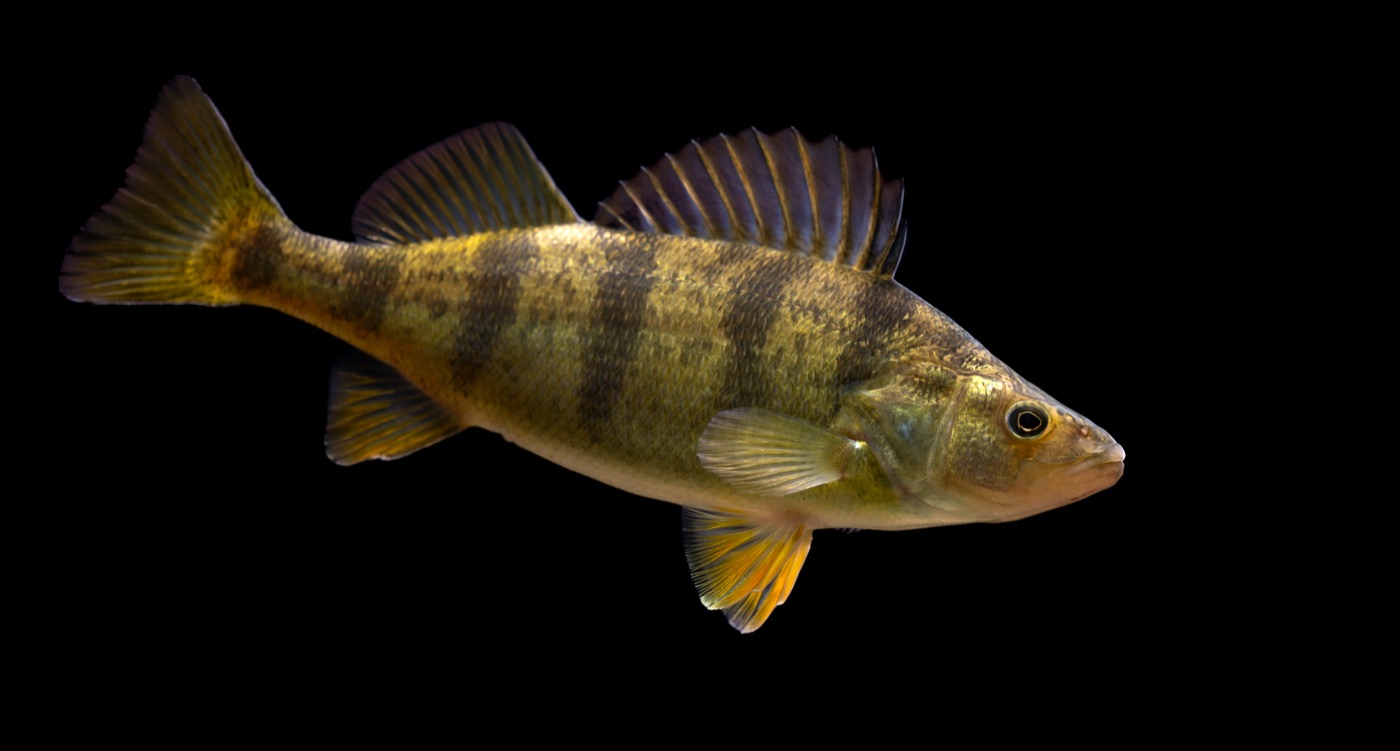
Yellow Perch
Yellow perch is a golden-bodied panfish of the perch family, easily known by six to eight dark vertical bars crossing its yellow sides.
Saltwater
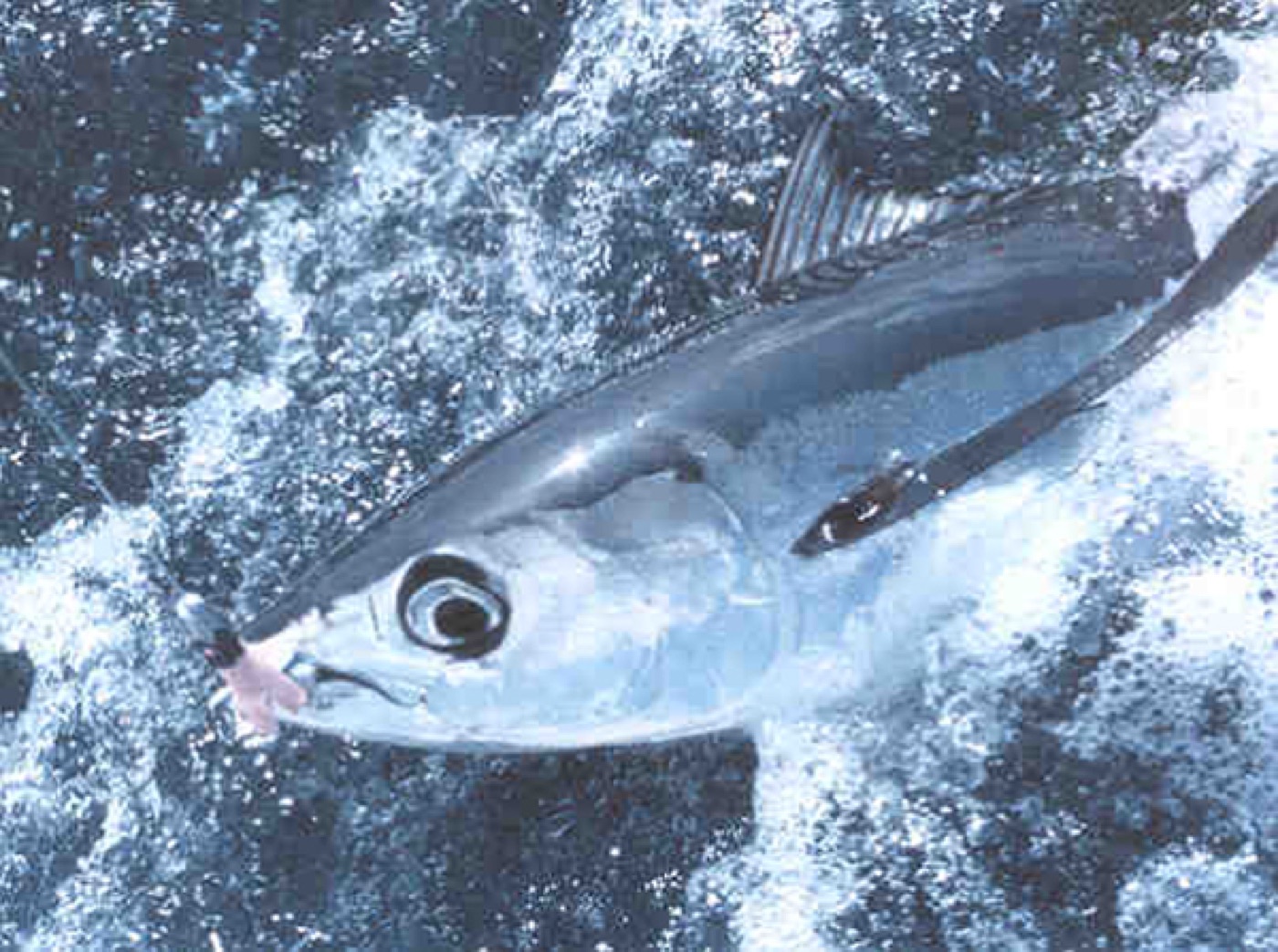
Albacore Tuna
Albacore tuna is a medium-sized, warm-blooded species of the mackerel family, prized worldwide as the only tuna that may be labeled canned white meat.
Alligator Gar
Alligator gar is a giant, armor-plated survivor from the age of dinosaurs, breathing air through a lung-like swim bladder and carrying a double row of teeth in its broad, alligator-like snout.
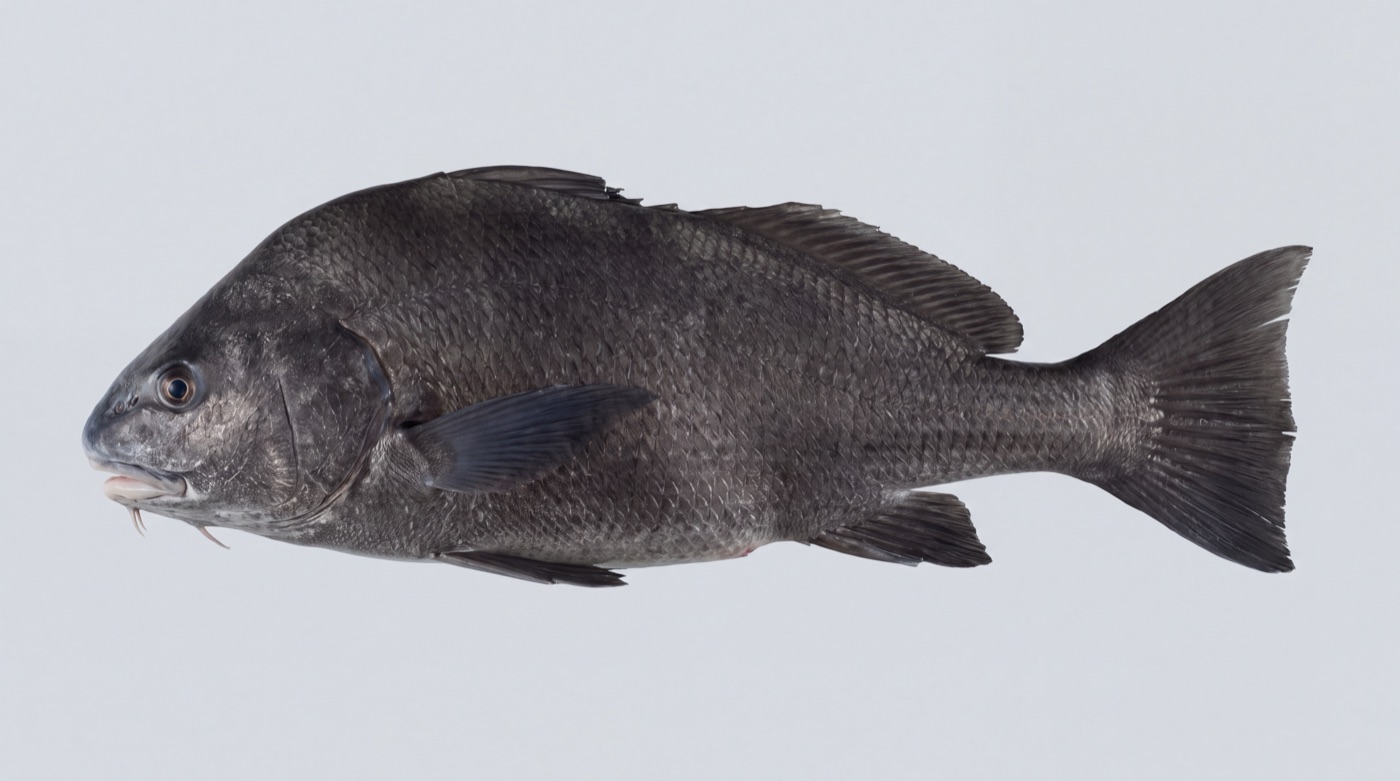
Black Drum
Black drum is a deep-bodied, high-backed member of the drum family, identified by the chin barbels it drags across the bottom to find buried shellfish.
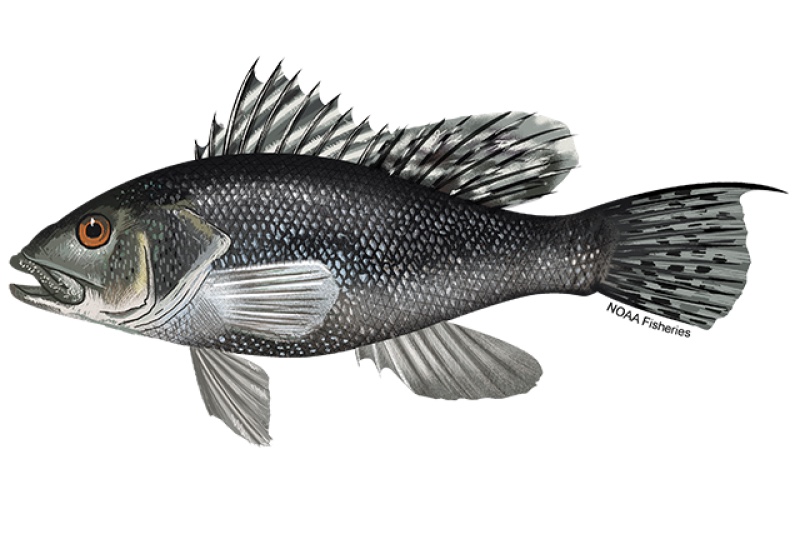
Black Sea Bass
Black sea bass is a structure-loving Atlantic bottom fish with a remarkable biology: most start life as females and become males as they grow, and spawning males develop a bright blue hump on the head.
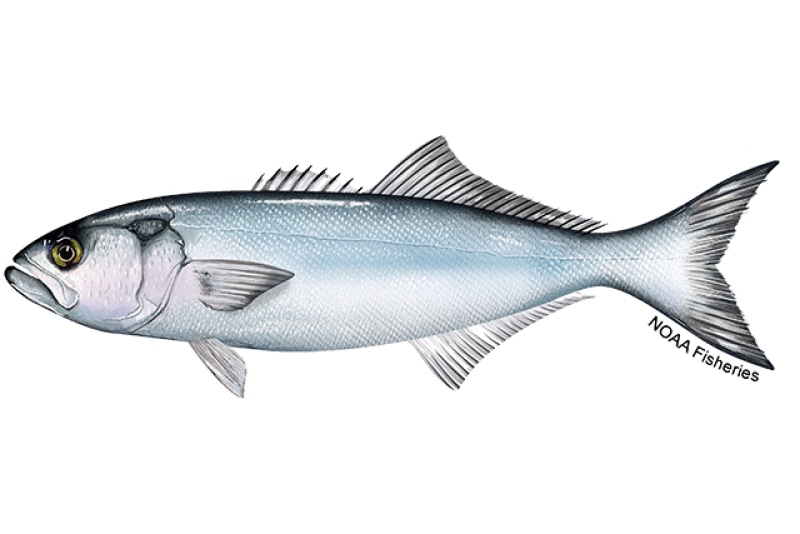
Bluefish
Bluefish is a fast, migratory coastal predator — the only member of its family — armed with razor-sharp teeth and famous for feeding blitzes that drive baitfish to the surface.
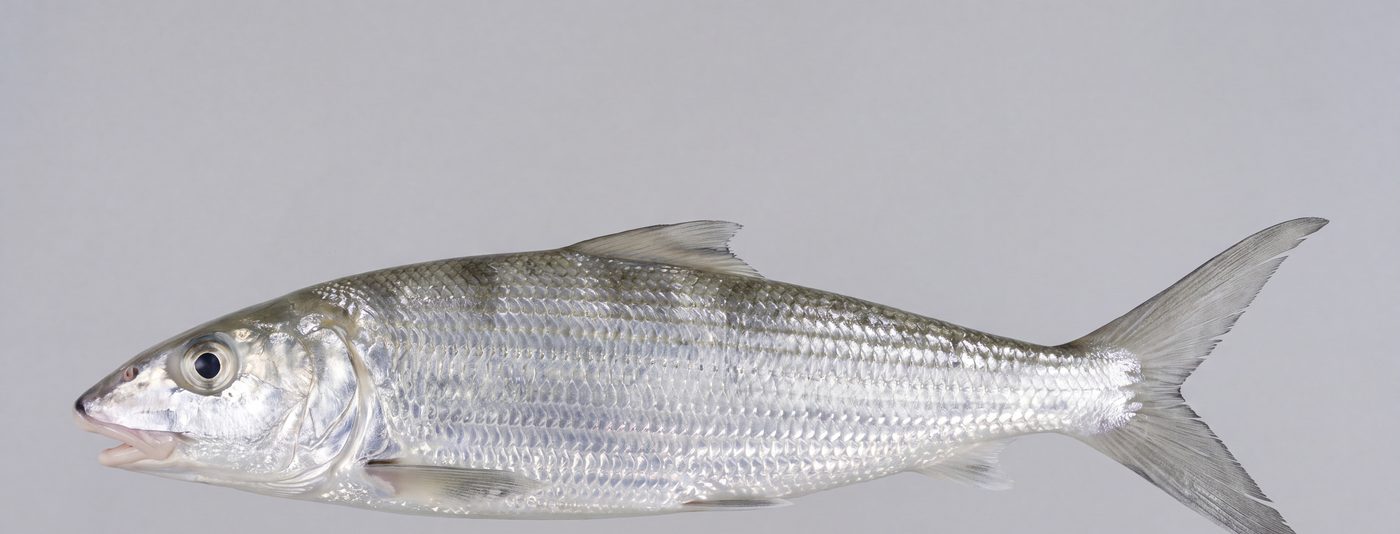
Bonefish
Bonefish is a silver flats-dwelling fish of tropical shallows, feeding head-down over sand and seagrass with a blunt snout and an underslung mouth built for rooting out buried prey.
Chinook Salmon
Chinook salmon is the largest of the Pacific salmon, identified by black spots across both lobes of its tail and by the black gums at the base of its lower teeth that earned it the nickname blackmouth.
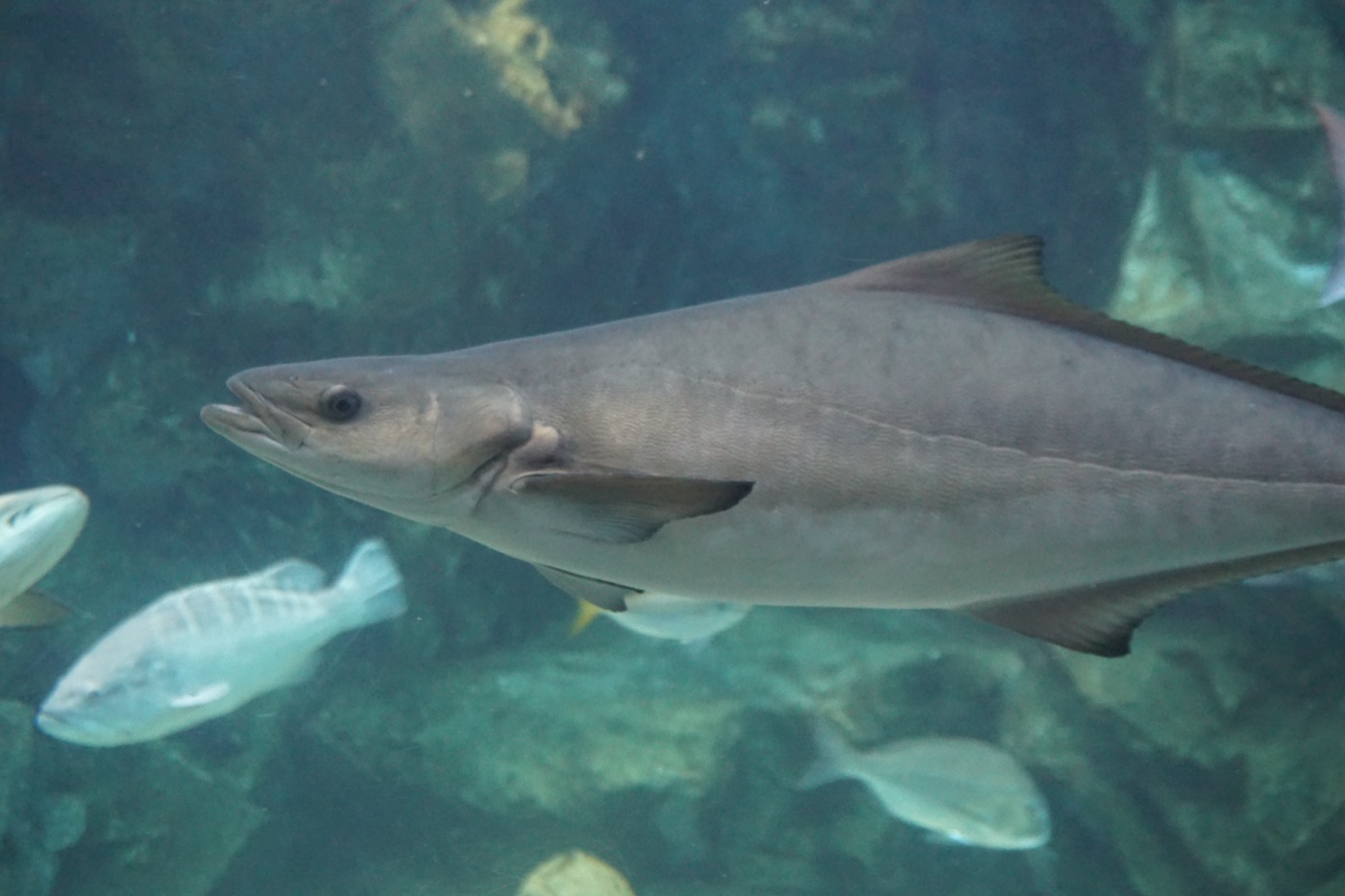
Cobia
Cobia is a large, solitary coastal gamefish with a broad flat head and dark brown body, often mistaken at a distance for a shark or remora.
Coho Salmon
Coho salmon is a mid-sized Pacific salmon separated from the larger chinook by black spots on the upper lobe of the tail only, and by the pale gums at the base of its lower teeth.
Cutthroat Trout
Cutthroat trout is the native trout of the American West, named for the vivid red slashes under each jaw — and unlike the Pacific salmon it shares a genus with, it survives spawning to spawn again.
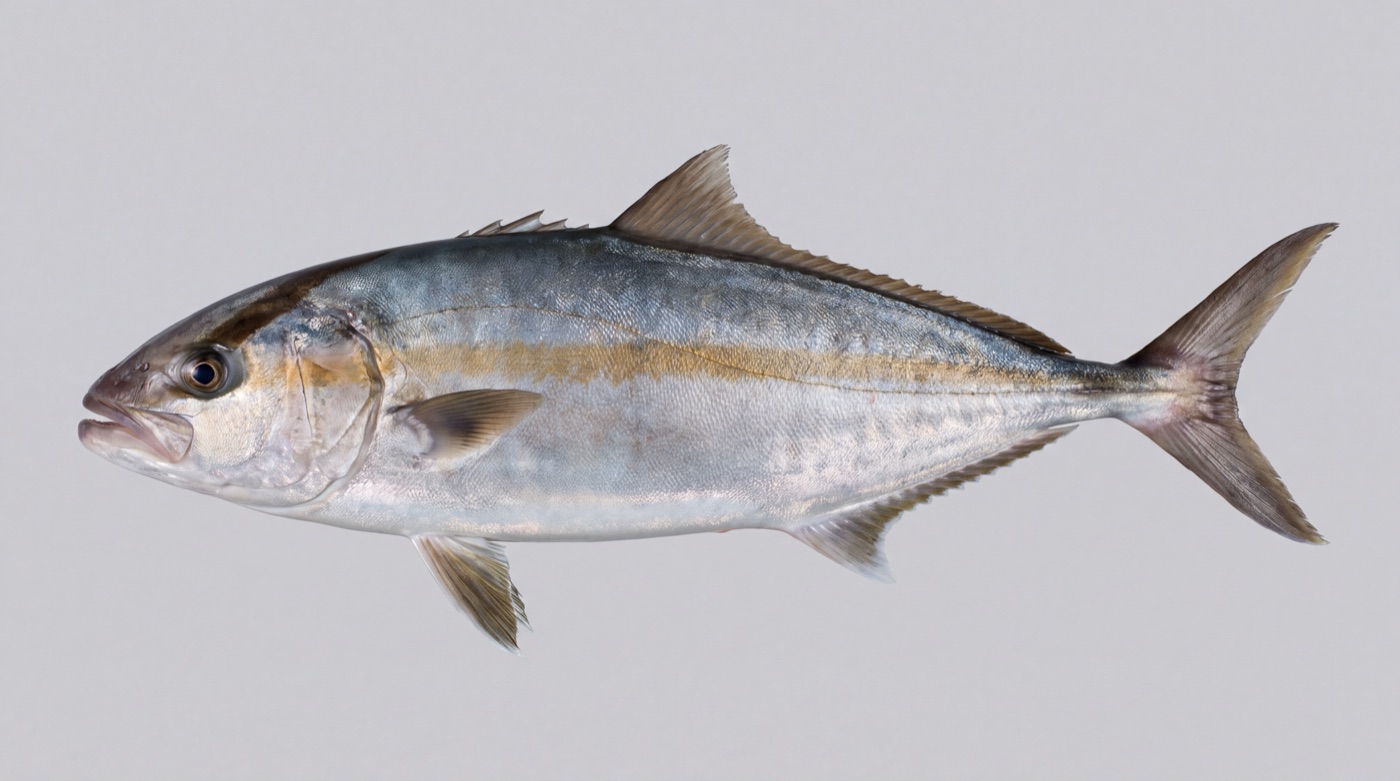
Greater Amberjack
Greater amberjack is a powerful reef-dwelling member of the jack family, identified by the dark diagonal band running from its nose through the eye to the first dorsal fin.
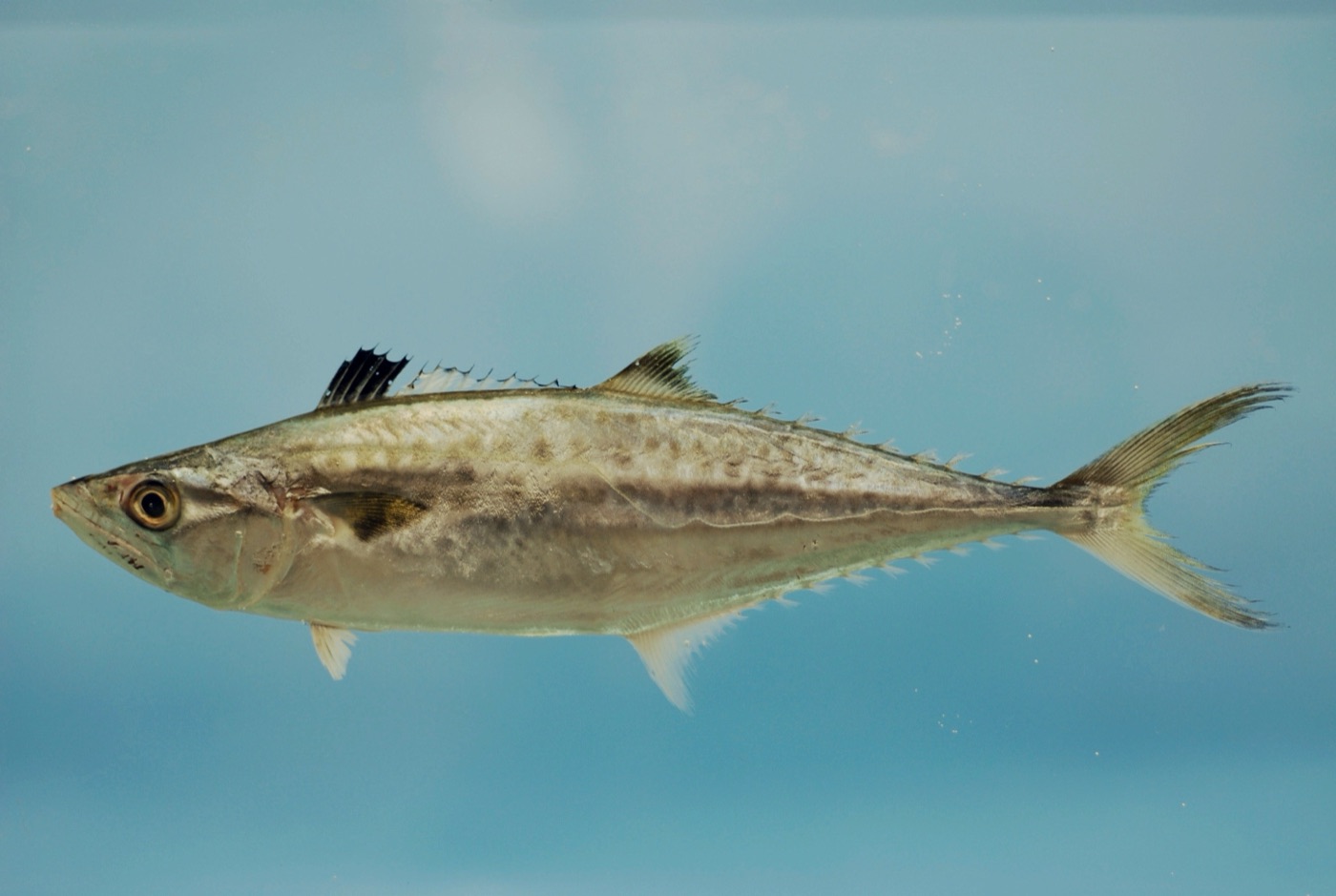
King Mackerel
King mackerel is a fast, migratory member of the mackerel family, built as a streamlined open-water predator with a steeply dropping lateral line.
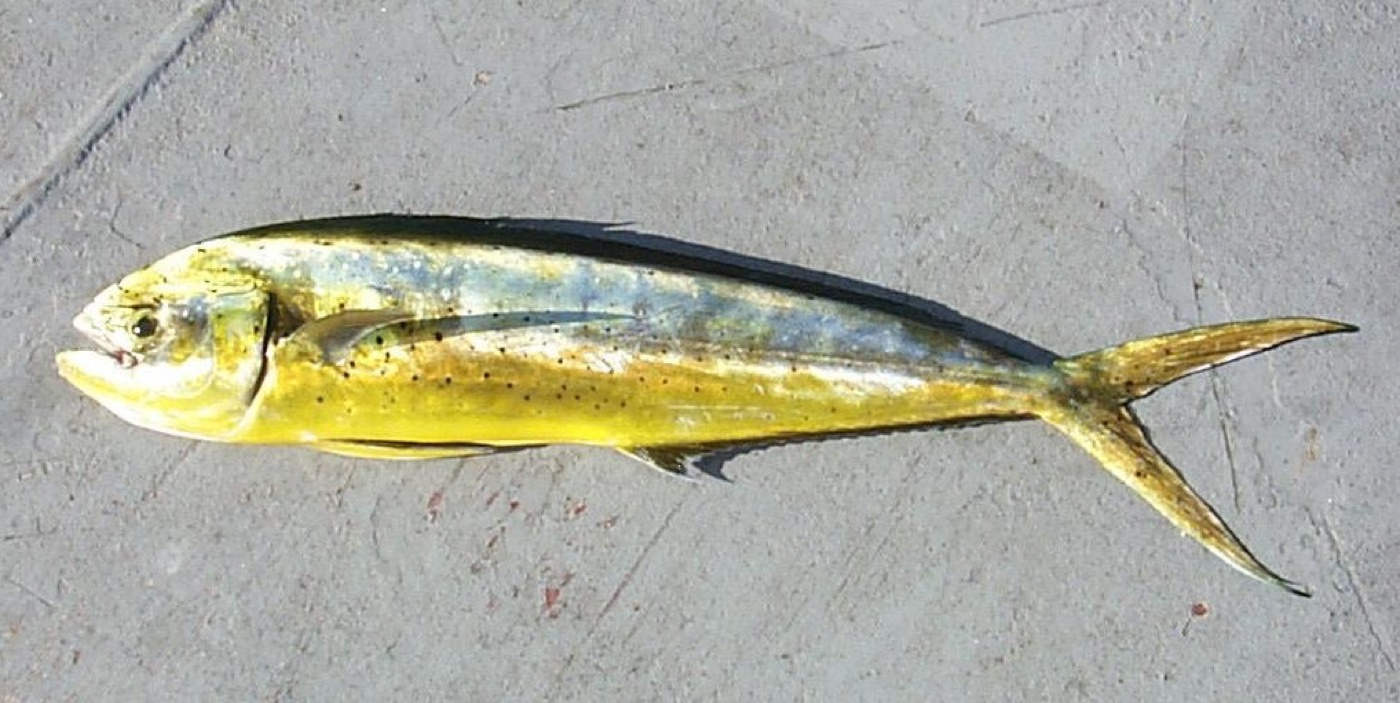
Mahi-Mahi
Mahi-mahi is a fast-growing offshore gamefish famous for brilliant blue-green and gold coloration and one of the quickest growth rates of any fish.
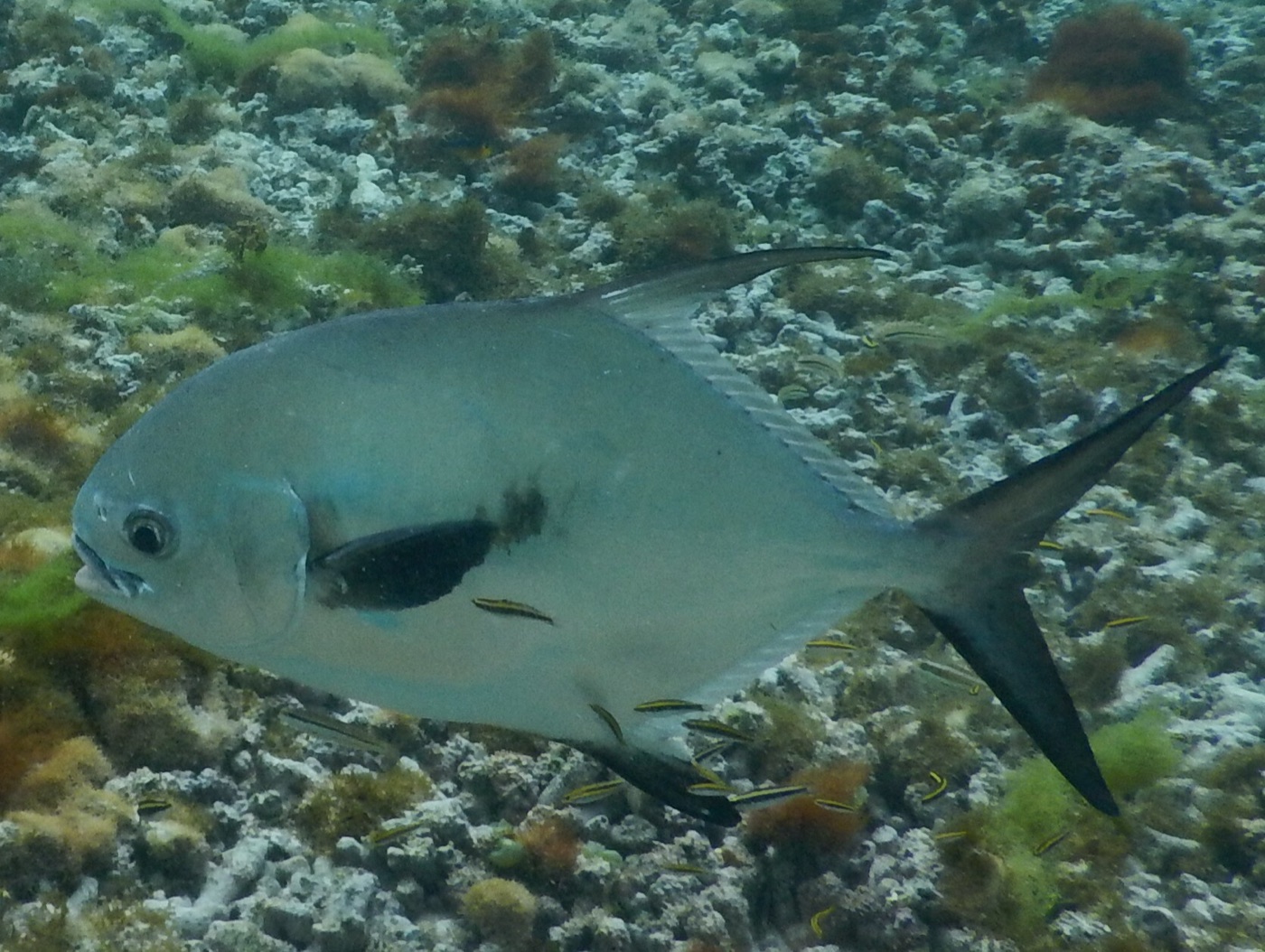
Permit
Permit is the flats angler's hardest prize — a tall, flat-sided jack with elongated dorsal and anal fins and a deeply forked tail, told from the smaller Florida pompano by a dorsal fin that begins over the anal fin.
Pink Salmon
Pink salmon is the smallest and most abundant Pacific salmon, locked to a strict two-year life cycle that splits every river's fish into genetically separate odd-year and even-year populations.
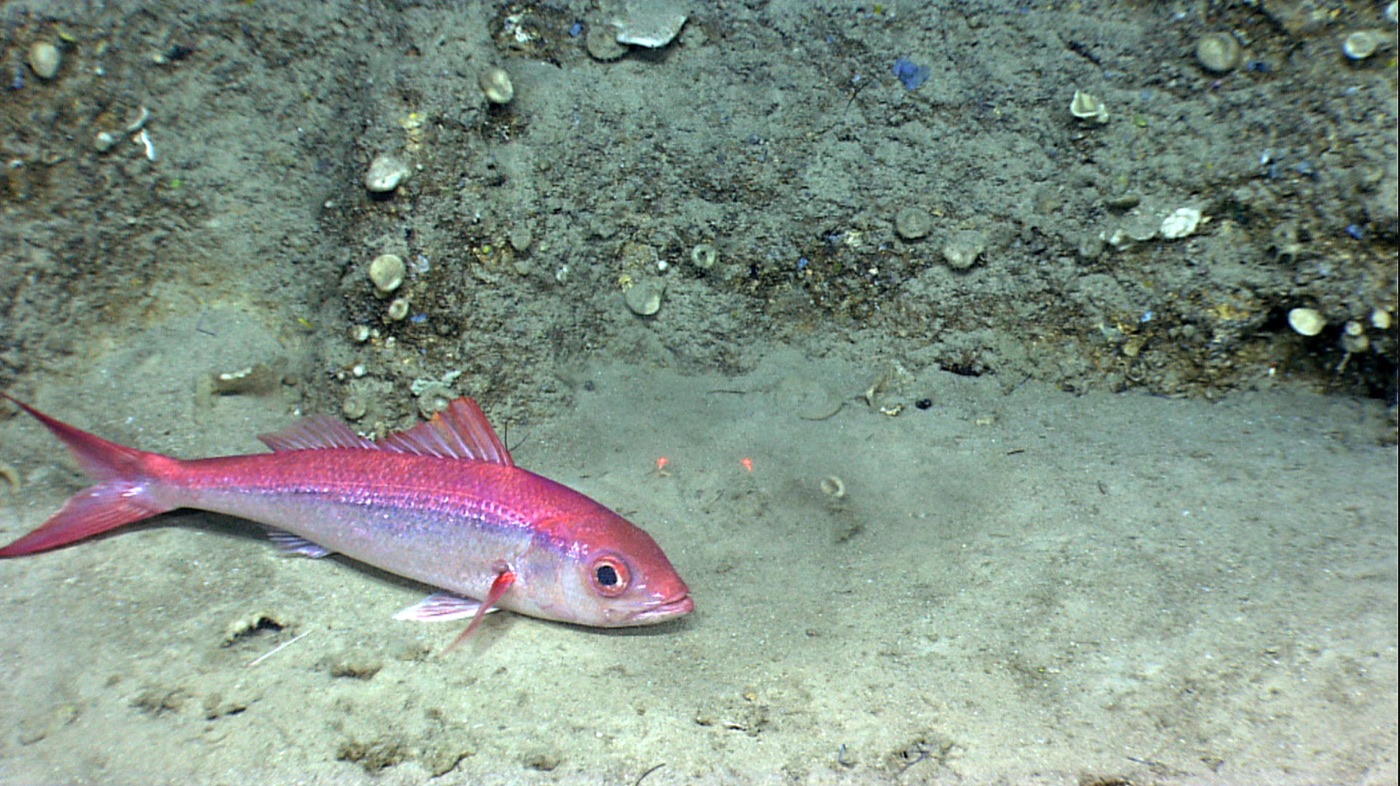
Red Snapper
Red snapper is a deep-bodied reef fish of the snapper family, prized for its brick-red coloration and firm, white, highly valued flesh.
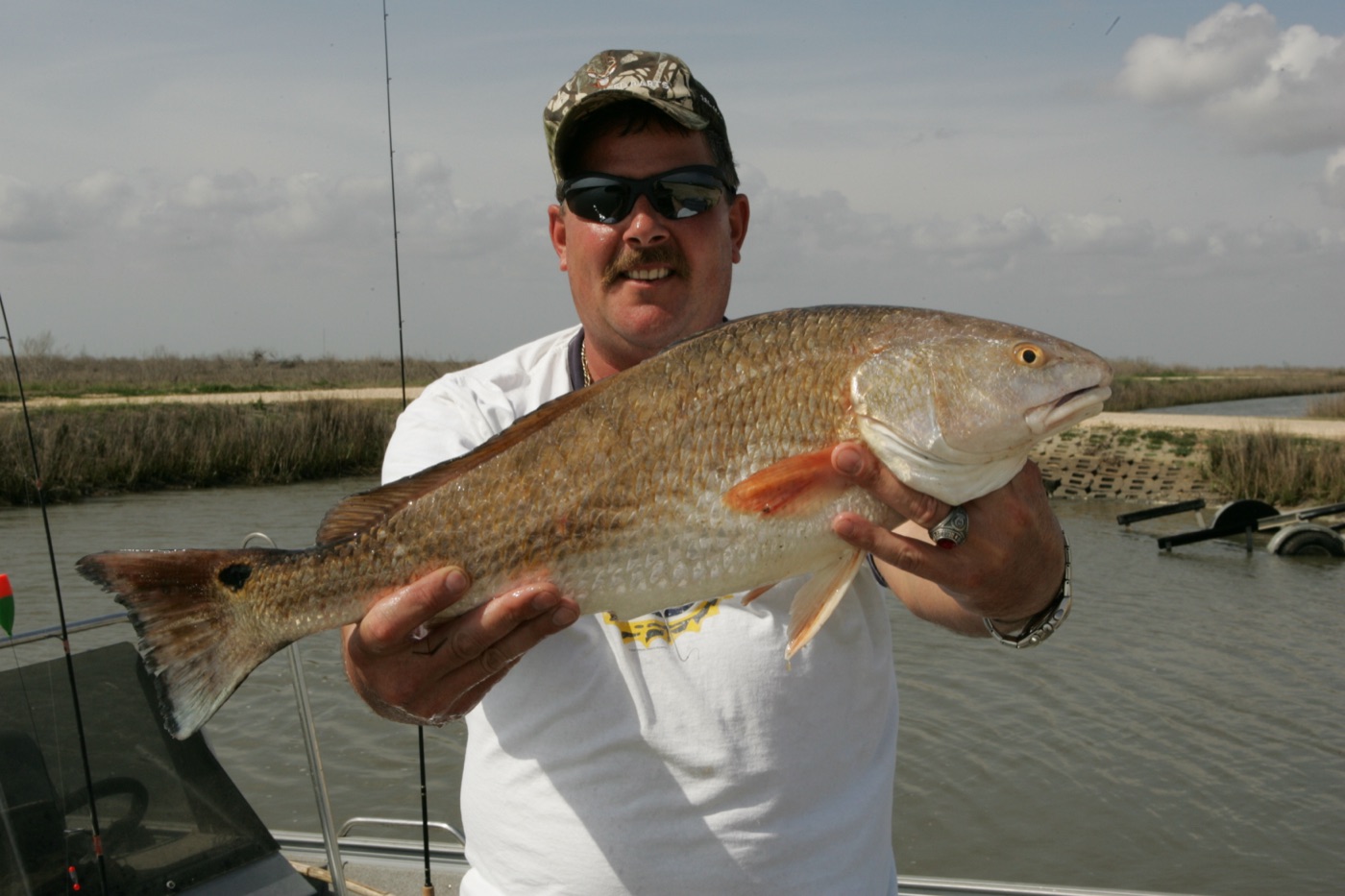
Redfish
Redfish is a coastal gamefish of the drum family, easily identified by the copper-red body and one or more black spots at the base of the tail.
Sheepshead
Sheepshead is a stout, deep-bodied member of the porgy family, instantly known by the bold vertical black bars along its flank and the disconcertingly human-looking teeth at the front of its jaws.
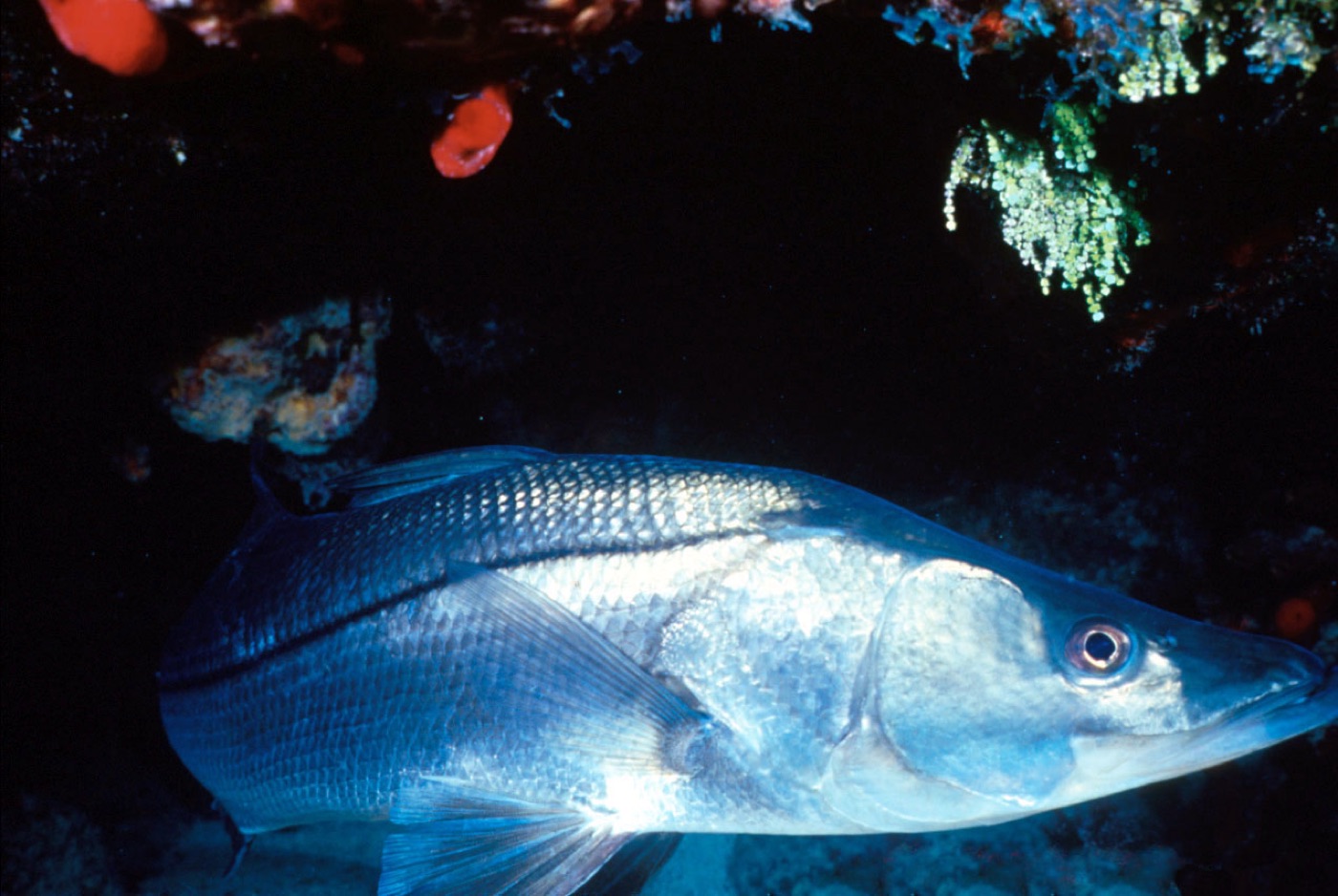
Snook
Snook is a warm-water coastal gamefish marked by a sharp black lateral line running the full length of its yellow-tinged silver body.
Sockeye Salmon
Sockeye salmon is the Pacific salmon of the lakes — a plankton-feeder whose spawning transformation, bright red body under a green head, is the most dramatic in the family.
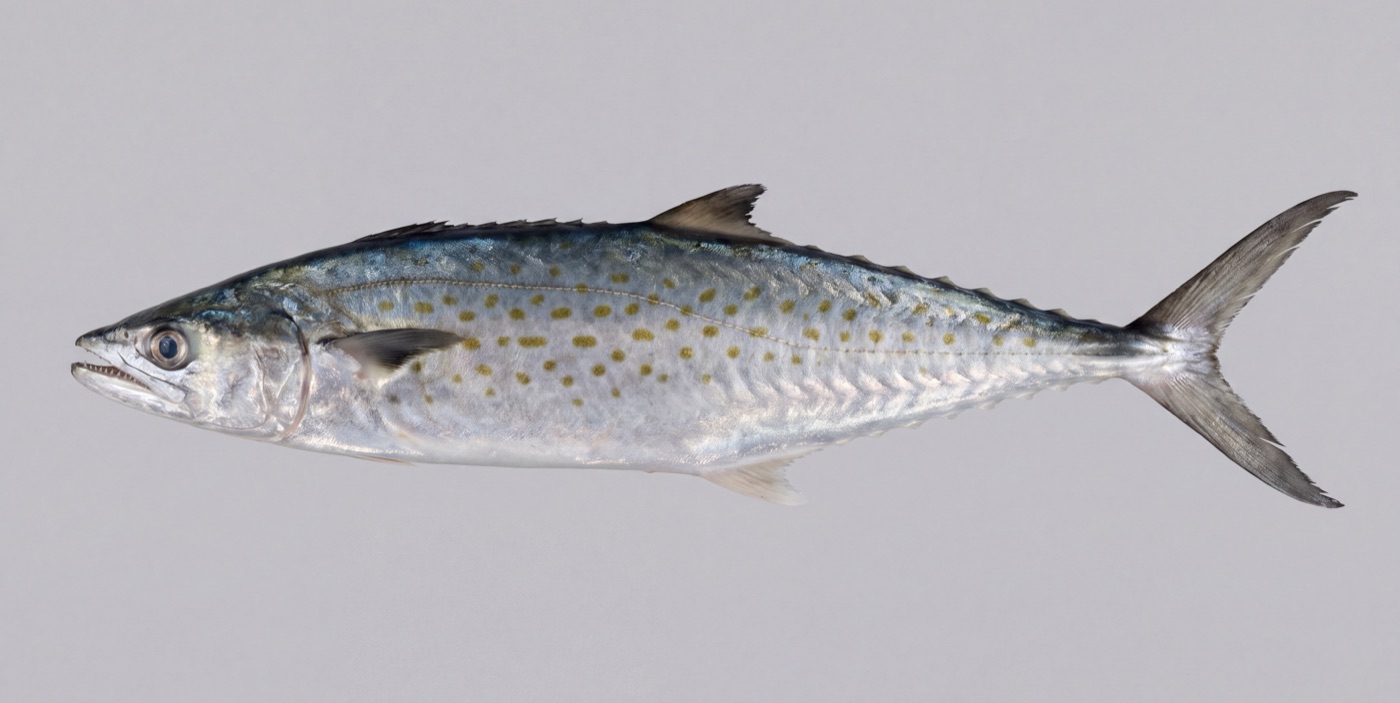
Spanish Mackerel
Spanish mackerel is a fast-growing coastal member of the tuna and mackerel family, marked by scattered yellow-olive oval spots on bright silver flanks.
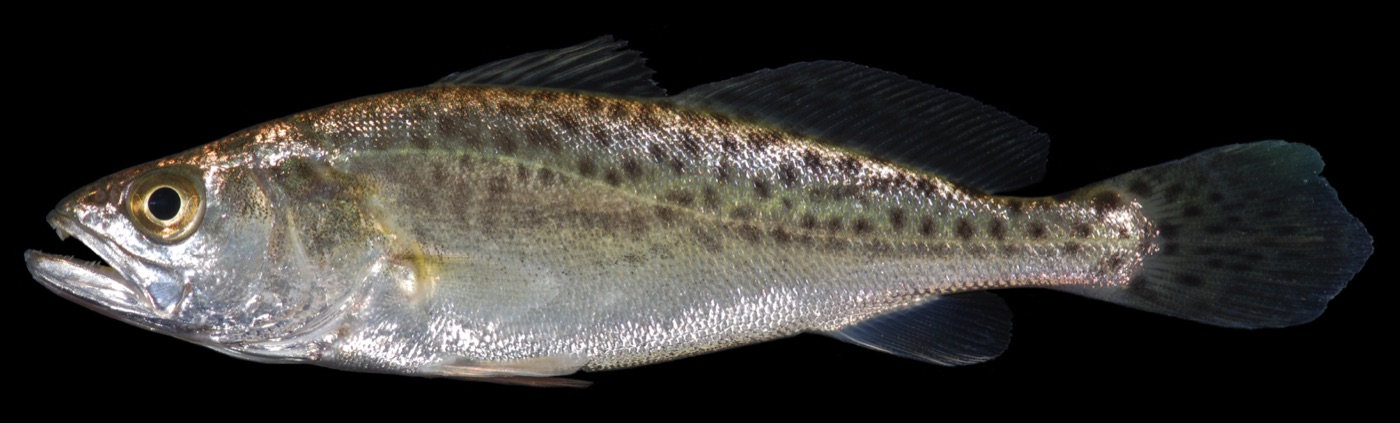
Speckled Trout
Speckled trout is a coastal member of the drum family, not a true trout, recognized by silvery sides scattered with distinct round black spots.
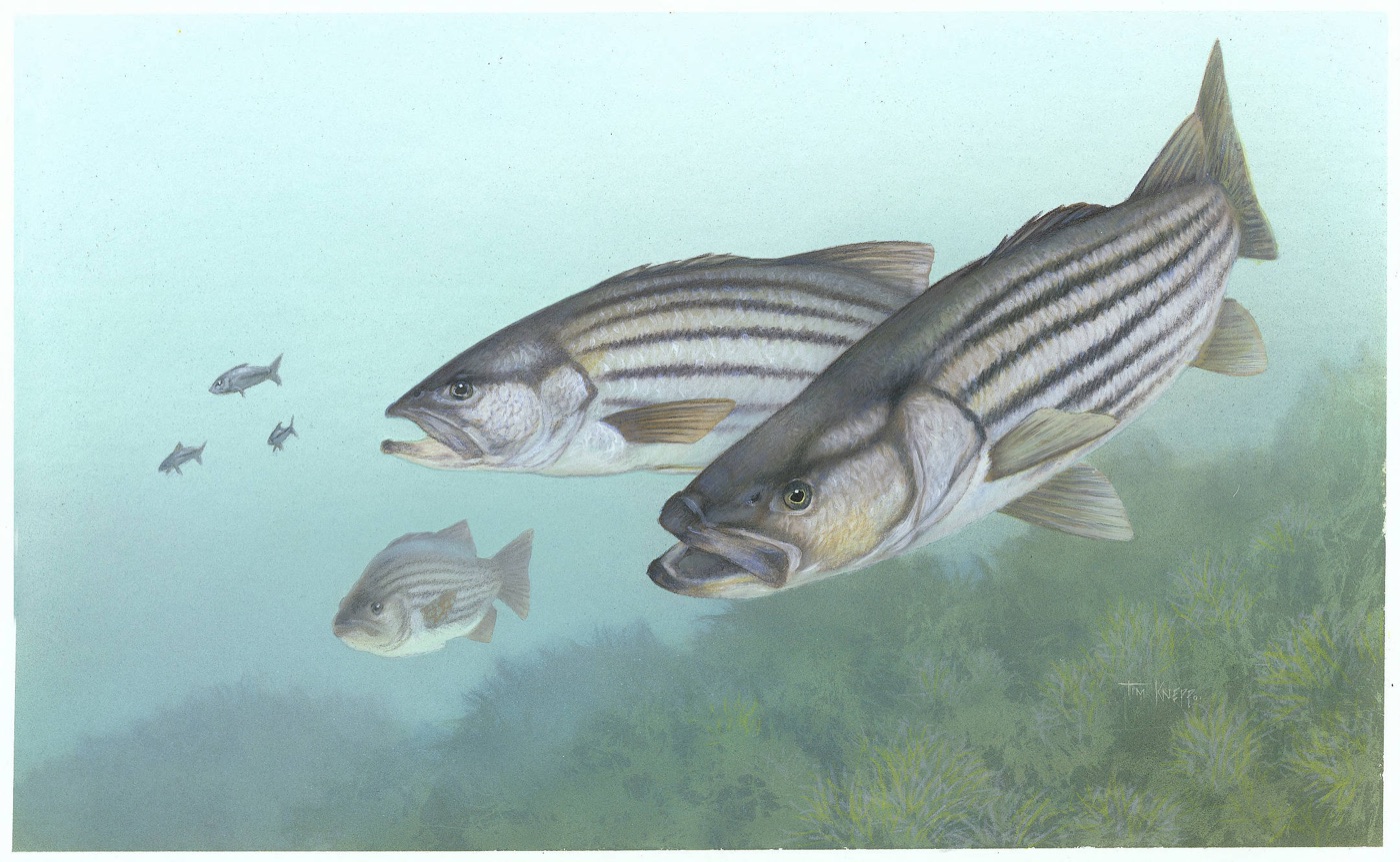
Striped Bass
Striped bass is a large migratory fish of the temperate bass family, named for the seven or eight dark horizontal stripes running along its silvery sides.
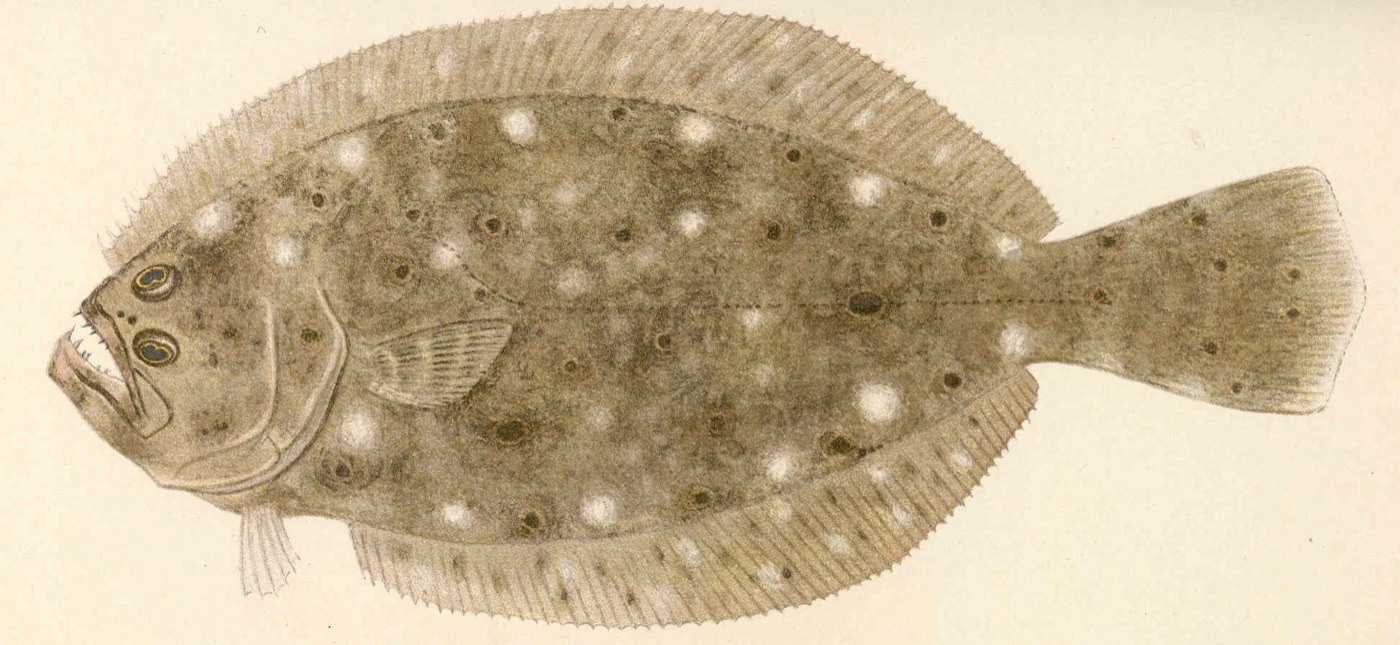
Summer Flounder
Summer flounder is a flat, left-eyed bottom fish that lies camouflaged on the seafloor with both eyes on the upper side of its body.
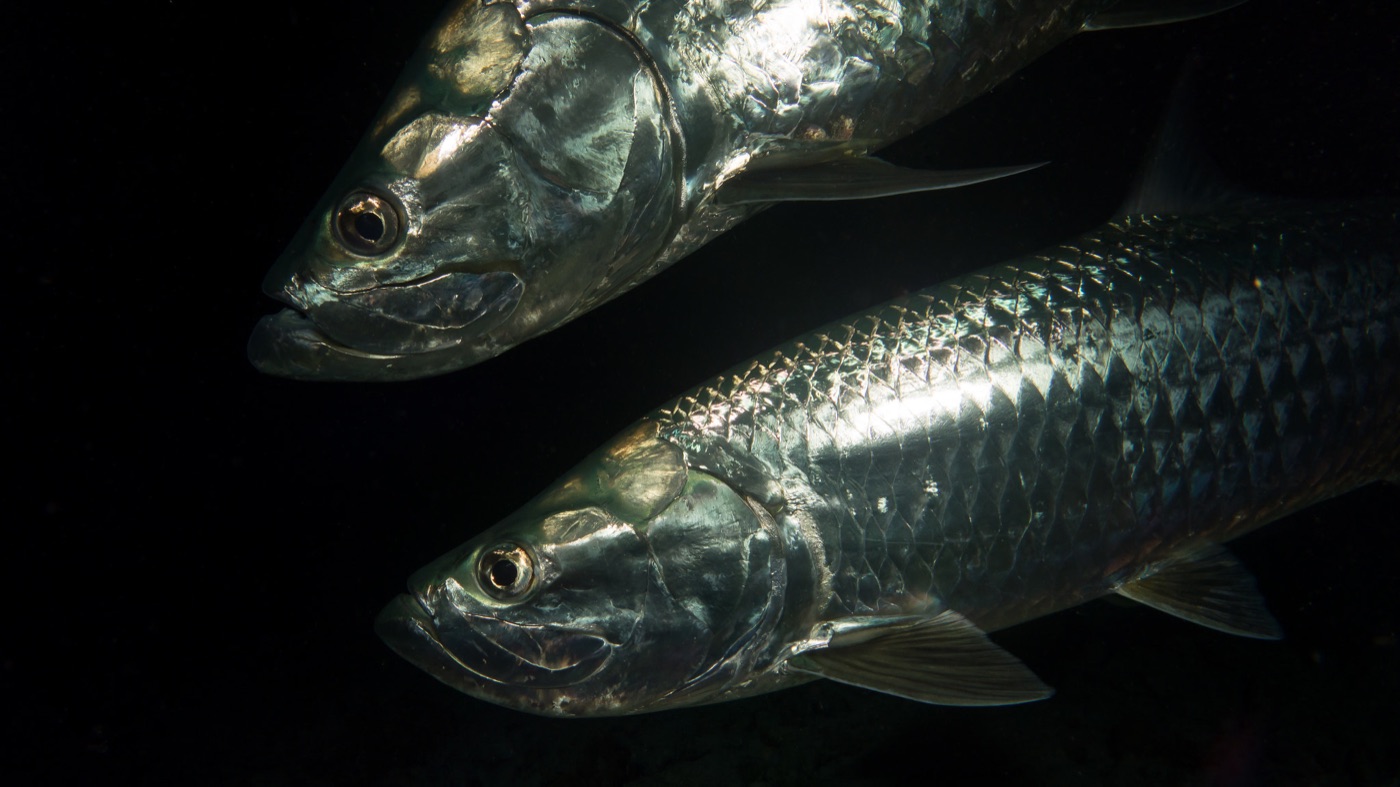
Tarpon
Tarpon is a large, prehistoric coastal gamefish clad in massive silver scales, renowned as one of the greatest fighting fish in the sea.
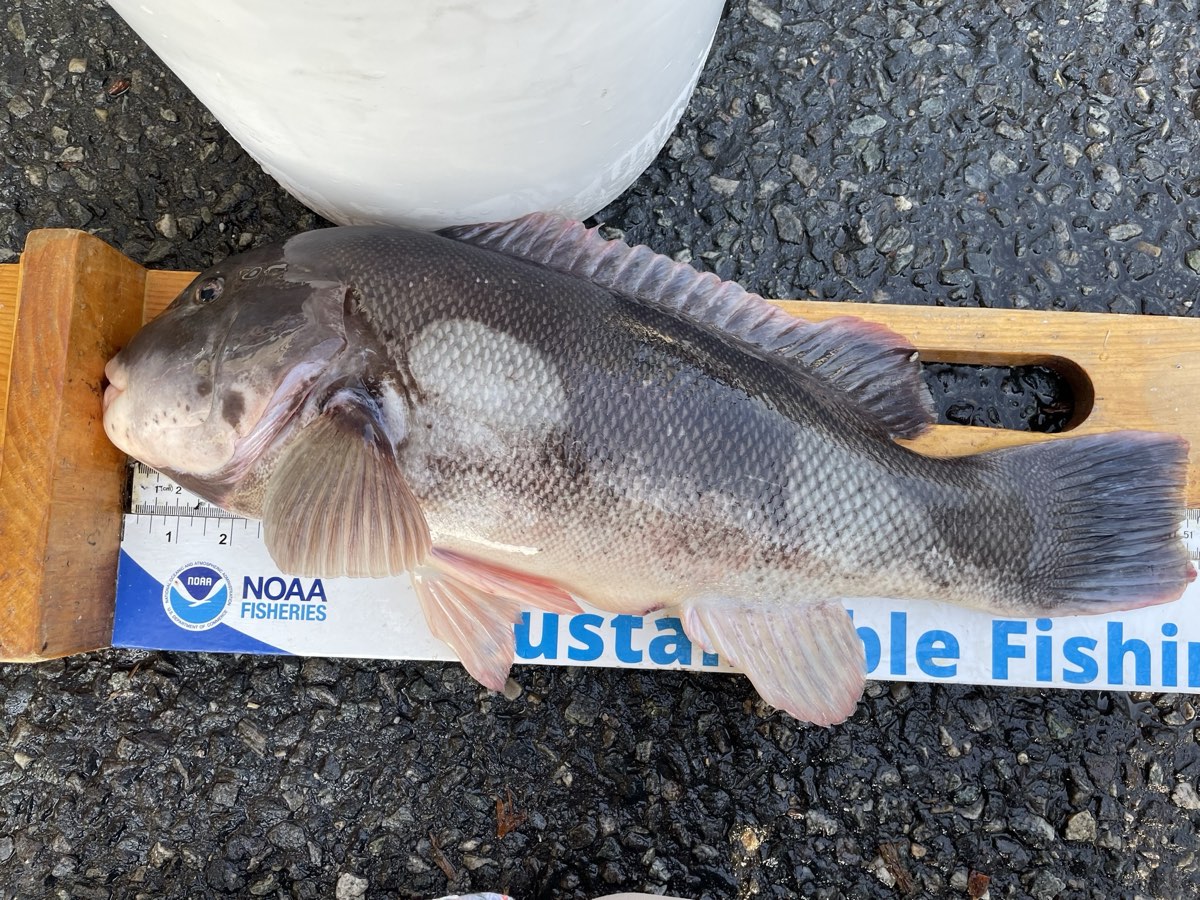
Tautog
Tautog is a stout, slow-growing wrasse of Atlantic rock and wreck, armed with heavy shell-crushing teeth — a fish so faithful to its home structure that it returns there nightly to sleep.
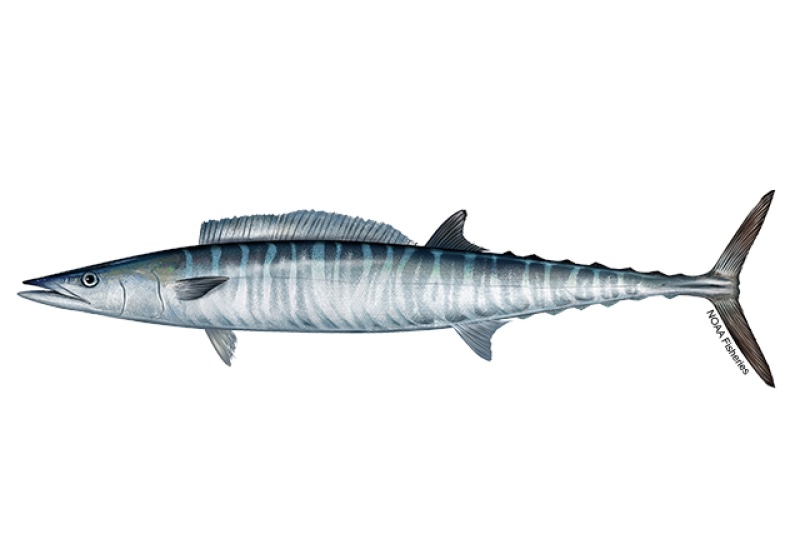
Wahoo
Wahoo is the loner of the mackerel family — a steel-blue open-ocean predator barred with 25 to 30 vertical stripes, hunting alone or in small groups rather than schools.
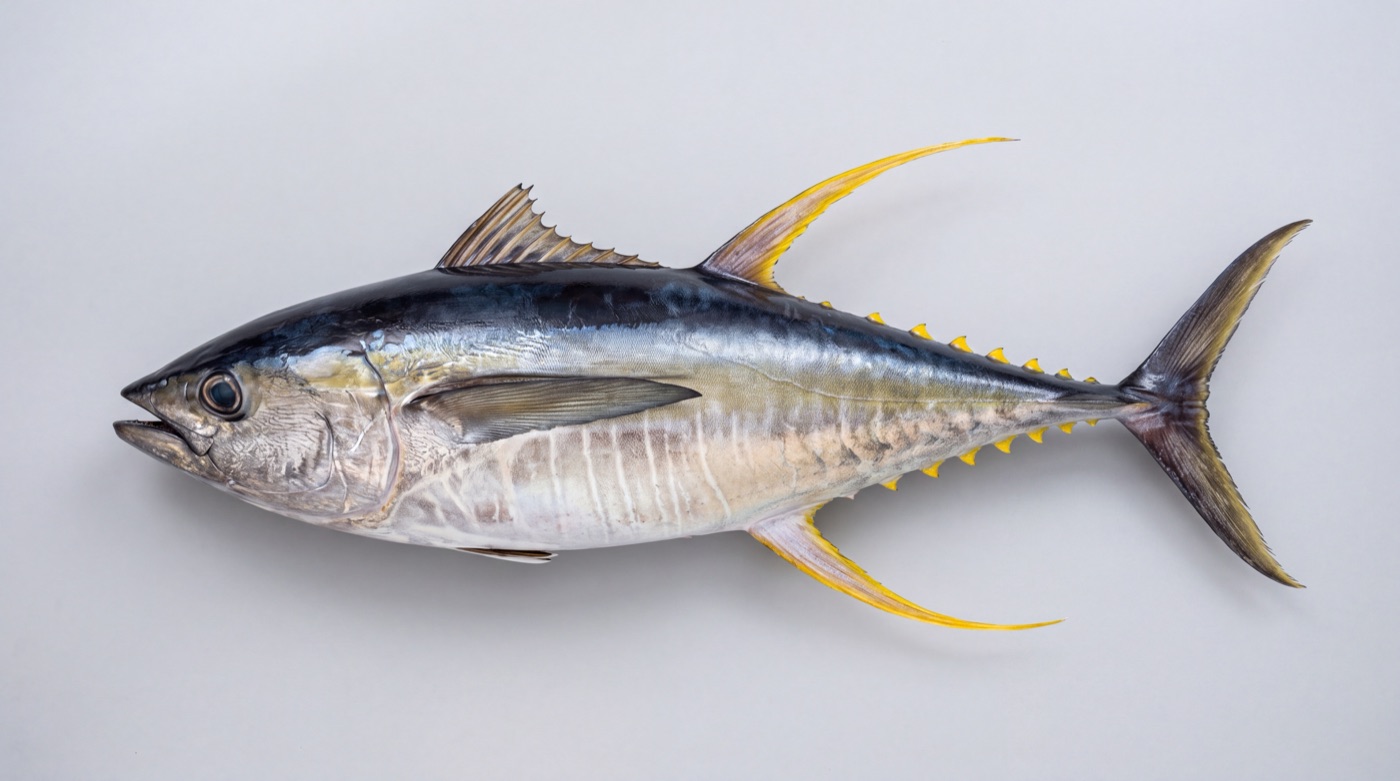
Yellowfin Tuna
Yellowfin tuna is a fast-growing open-ocean predator of the mackerel family, recognised by the greatly elongated second dorsal and anal fins that trail back along its flanks.
Know when they'll bite.
BiteScore turns live weather, pressure, and moon data into a simple feeding forecast for your spot.
Get the App