Fishing Hook Sizes Explained: From #32 to 19/0
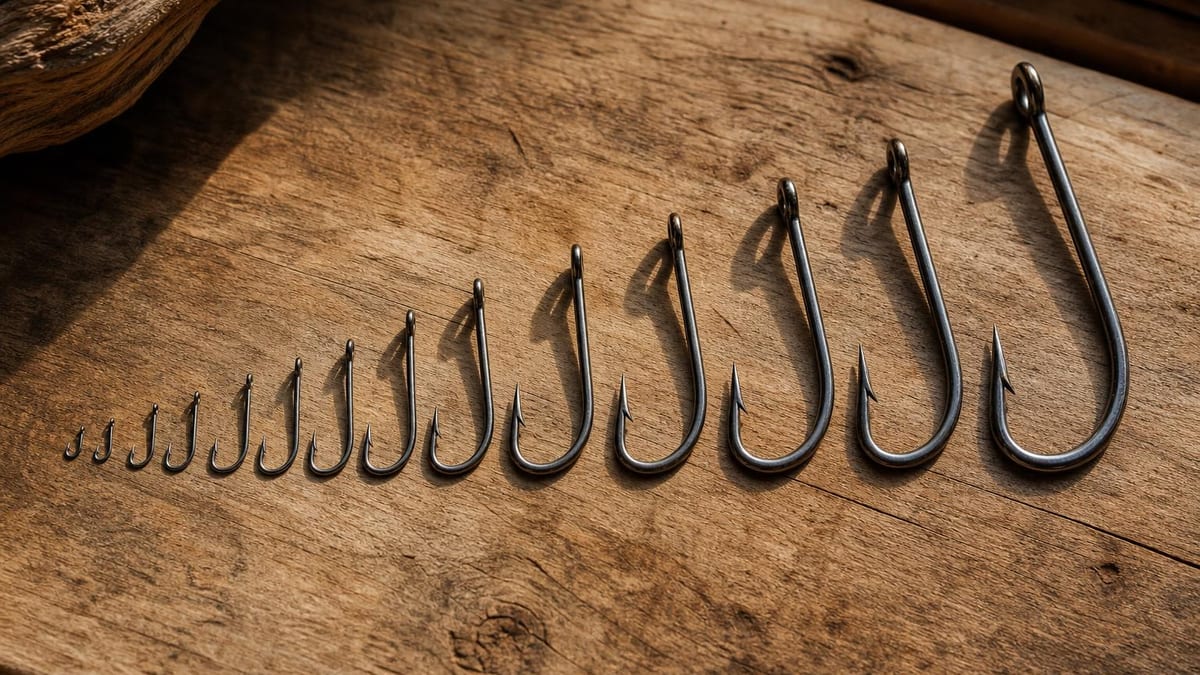
Fishing hooks run from size 32 (tiny) up to size 1, then flip to 'aughts' — 1/0 up to 19/0 (huge). Below the flip, bigger numbers mean smaller hooks; above it, bigger numbers mean bigger hooks. Size is really about the gap between point and shank, and the rule that matters is matching the hook to your bait and your target species.
Key takeaways
- Two scales meet at 1: sizes #32→#1 shrink as numbers grow; aughts 1/0→19/0 grow with the number.
- What's actually measured is the gap — the distance between hook point and shank.
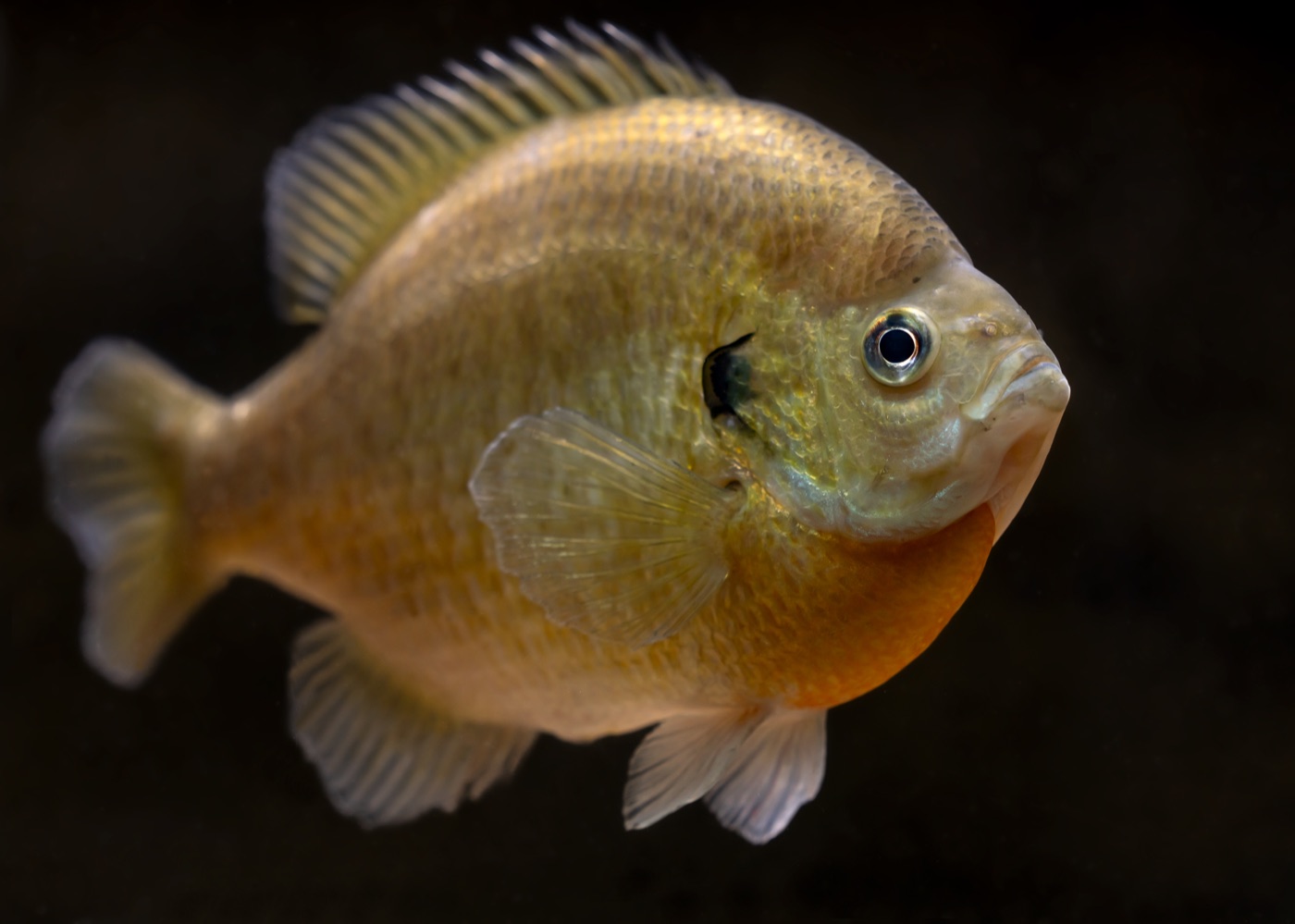
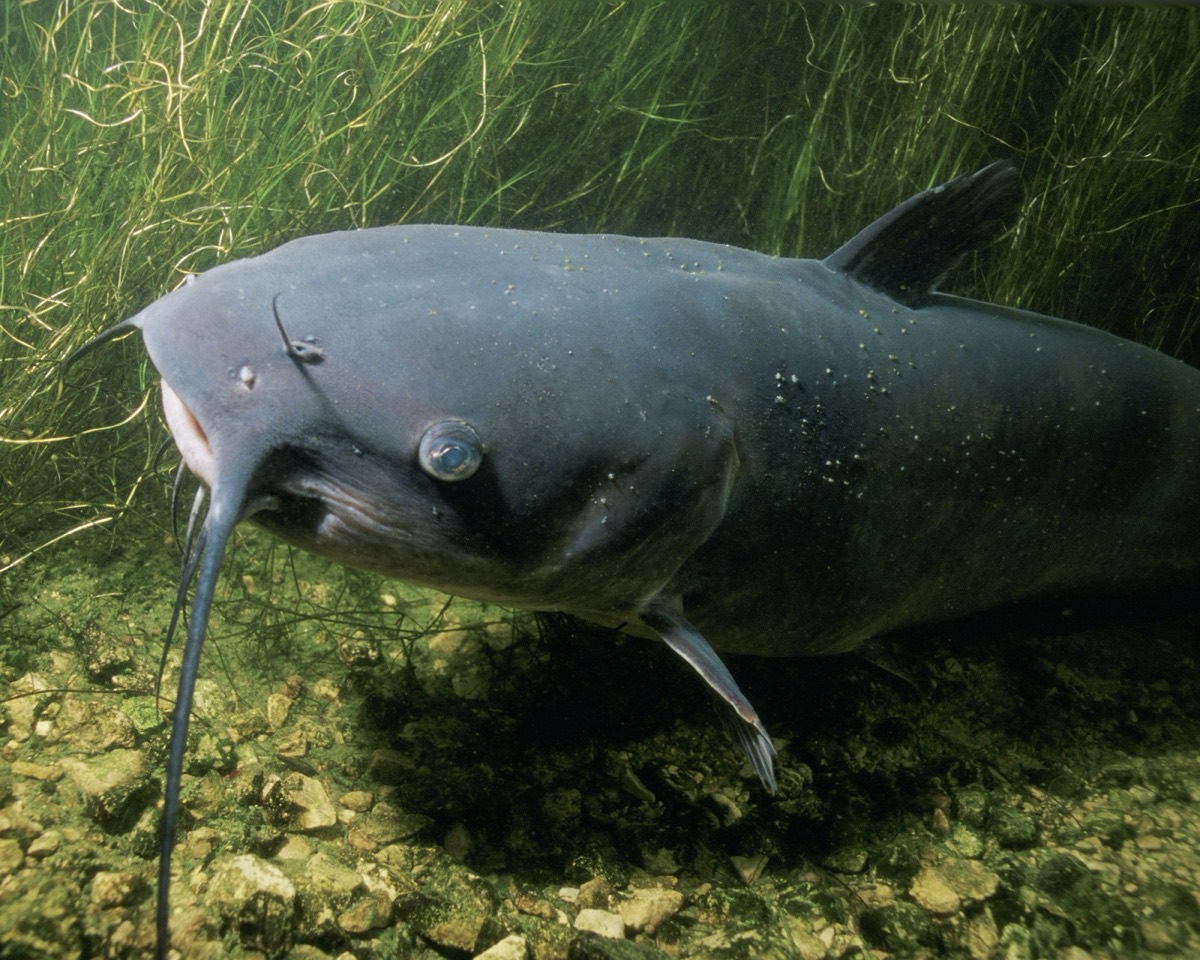
- Match hook to bait and species: thin-wire #6–#10 for sunfish, #1–#2 for bass and catfish, big aughts for big saltwater fish.
- Six parts to know: point, barb, eye, bend, shank, gap — every hook conversation uses these words.
- Agencies consistently recommend circle hooks with natural bait — Florida's FWC cites 90% more mouth-hooking versus gut-hooking.
- Barbless (or crimped-barb) hooks make release faster and safer — for the fish and for you.
The number system nobody explains first
Hook sizing is fishing’s favorite hazing ritual: a #4 hook is smaller than a #1, but a 4/0 is bigger than a 1/0, and nobody tells you until you’ve bought the wrong box. Here is the whole system in two sentences. From size 32 (the smallest made) up to size 1, hooks grow as the number shrinks. At 1 the scale flips into “aughts” — written 1/0, spoken one aught — and from 1/0 to 19/0 hooks grow with the number.
The thing actually being measured, per Take Me Fishing’s sizing guides, is the gap — the distance between the hook’s point and its shank. That’s worth internalizing, because gap is what determines what the hook can grab: a bait it can ride in naturally, and a jaw it can get around. Two hooks of the same “size” from different patterns can differ in shank length or wire thickness, but the gap is the sizing language everyone shares.
Six words that unlock every hook conversation
Hook anatomy takes thirty seconds to learn and never stops paying. The point is the sharp end that penetrates. The barb is the backward projection that keeps a fish from unhooking. The eye is the ring your line ties to — through knots like the improved clinch or Palomar. The bend is the curve; the shank is the straight run between bend and eye — the part a snelled hook wraps; and the gap is the distance between point and shank that sizing describes.
Once you own the vocabulary, product walls stop being noise. “Long-shank #6” now means something: a small-gap hook with extra steel to grip — a classic panfish choice, easier to remove from small mouths.
Matching size to bait and species
The working rule from every agency source is the same: match the hook to the size of your bait and the size of your target — never to hope. The verified anchors:
| Target | Agency guidance |
|---|---|
| Sunfish / bluegill | Thin-wire #6–#10 (Texas Parks and Wildlife) |
| Bass, channel catfish | #1 or #2 medium hooks (TPWD) |
| Grouper-class saltwater | Around 5/0 (Florida FWC) |
| Sharks | Up to 18/0 (FWC) |
Both directions of wrong-sizing cost you. Take Me Fishing notes a too-small hook can simply go unnoticed among debris, while an oversized hook “may never catch in the first place” — too much steel for the fish to take in. When in doubt, size to the bait: the hook should let the bait move naturally, with the gap clear enough to find jaw.
Circle hooks: the shape agencies keep recommending
One hook design earns explicit agency endorsement, and it’s worth understanding why. A circle hook turns its point perpendicular to the shank, and Florida’s FWC reports the result: with natural bait, circles are 90% more likely to hook fish in the mouth instead of the esophagus or stomach — which means less internal damage, faster dehooking, and fewer fish swimming off with hardware. NOAA’s release best practices recommend circles and note that some fisheries require them — regulations vary by state and species, so check your agency’s current rules for the water you fish.
Circles demand one habit change. FWC’s guidance: don’t set the hook like a J-hook angler. Maintain steady tension and let the hook rotate into the corner of the mouth — anglers who slam the set with a circle mostly pull the bait out of the fish. Pair the shape with the right steel: NOAA recommends non-stainless hooks, which corrode and shed if a fish breaks off with one aboard, and FWC echoes non-stainless, non-offset circles.
Barbless: the smallest change with the biggest release payoff
The barb exists to keep fish on — and it’s exactly what makes hooks hard to remove from fish, nets, clothing and thumbs. For release-minded fishing, the agencies are aligned: NOAA notes barbless circle hooks are easier to remove or even self-shedding, minimizing harm to fish you let go; FWC points out they’re easier to get out of “a fish or yourself”; and TPWD gives the practical move — you don’t need special hooks, just bend the barb down with pliers. The cost is honest: a barbless hook forgives slack line less, so fight fish with steady tension. The payoff is faster releases, healthier fish, and easier Tuesday evenings at the emergency clinic you never visit.
Hook choice sits inside a bigger system — the right knot on the right line ahead of the right hook — and none of it needs to be expensive. A pocket of thin-wire #8s, a few #1s, a couple of circles for bait fishing, and pliers to crimp barbs covers most of freshwater fishing for a few dollars. Size to the bait, match the species, and let the numbers finally mean something.
Frequently asked questions
How do fishing hook sizes work?
One scale, two directions, meeting at 1. From size 32 up to size 1, the larger the number, the smaller the hook — a #10 is small, a #2 noticeably bigger. At 1 the system flips to aughts, written 1/0 ('one aught') through 19/0, where larger numbers mean larger hooks. What's growing is the gap — the distance between point and shank, per Take Me Fishing's sizing guides. Counterintuitive once, then automatic forever.
What size hook should I use?
Match the bait and the species, not your optimism. Texas Parks and Wildlife's beginner guide gives the freshwater anchors: thin-wire #6 to #10 hooks for sunfish, #1 or #2 for bass and catfish. Florida's FWC scales the same idea up for salt: perhaps a 5/0 for grouper and up to an 18/0 for sharks. Wrong-sizing costs fish in both directions — Take Me Fishing notes a too-small hook can go unnoticed and an oversized one 'may never catch in the first place.'
What are the parts of a fishing hook called?
Six terms cover it, as defined in Take Me Fishing's hook guide: the point (the sharp end that penetrates), the barb (the backward projection that keeps a fish from unhooking), the eye (where line ties on), the bend (the curve), the shank (the straight run between bend and eye), and the gap (the distance between point and shank). Knowing them pays immediately — hook sizing is a statement about the gap, and knots like the snell wrap the shank.
Why do agencies recommend circle hooks?
Because of where they land. A circle hook's point turns perpendicular to the shank, and Florida's FWC reports they are 90% more likely to hook fish in the mouth rather than the esophagus or stomach — less internal harm, faster dehooking, fewer hooks left in fish. NOAA's release best practices recommend them alongside barbless hooks, noting some fisheries require them — always check your state's current regulations. One technique change comes with them: don't slam the hookset; keep steady tension and let the circle find the corner of the mouth.
Are barbless hooks worth using?
For anyone releasing fish — yes, and the agencies say so plainly. NOAA notes barbless circle hooks are easier to remove or even self-shedding, minimizing harm to released fish; FWC adds they're easier to remove 'from a fish or yourself,' which every angler eventually appreciates. No special purchase needed: Texas Parks and Wildlife's advice is simply to bend the barb down with pliers. The trade is a little more vigilance keeping a tight line during the fight.
Sources
- Fishing Hook Sizes — Take Me Fishing (Recreational Boating & Fishing Foundation). Accessed August 13, 2026.
- Fishing Hooks: Sizes, Types, Anatomy — Take Me Fishing (Recreational Boating & Fishing Foundation). Accessed August 13, 2026.
- Fishing Basics — Florida Fish and Wildlife Conservation Commission. Accessed August 13, 2026.
- Fish Handling — Florida Fish and Wildlife Conservation Commission. Accessed August 13, 2026.
- Catch and Release Fishing Best Practices — NOAA Fisheries. Accessed August 13, 2026.
- Barbless Circle Hooks — NOAA Fisheries, Pacific Islands. Accessed August 13, 2026.
- Fish Texas: A Basic Guide for the Beginning Angler — Texas Parks & Wildlife Department. Accessed August 13, 2026.
How we choose sources: sources policy.
More in this series
Know when it's worth going.
Fishing Club AI turns live weather, pressure and moon data into a simple bite forecast for your spot — so the skills you practise get used on the right day.
Get the App