What Is Lake Turnover? Why Fishing Changes for a Week Every Fall and Spring
Lake turnover is the natural mixing of a lake's water layers, caused by surface water cooling in fall (or warming in spring) until it is denser than the water beneath and sinks. Missouri's Department of Conservation calls it gentle and says it can happen literally overnight; Iowa's DNR puts fall turnover between late September and mid-October, after which fish use the entire water column.
Key takeaways
- Missouri's Department of Conservation: turnover is the gentle, natural mixing of pond and lake waters, driven by seasonal temperature change; most lakes turn over in both fall and spring.
- The mechanism is density. Water is heaviest at 39°F, so cooling surface water sinks through the warmer layer beneath it and wind erodes the thermocline until the lake is uniform.
- Iowa's DNR: fall turnover usually happens over a few days from late September to mid-October, and afterwards fish use the entire water column.
- Missouri notes turnover can happen literally overnight and can change the water's colour, taste and odour as accumulated bottom material circulates.
- The EPA's dissolved-oxygen factsheet: after turnover, temperature and DO are generally the same throughout the lake — the summer depth rules stop applying.
The definition, from the agency that manages ponds
Missouri’s Department of Conservation publishes a pond-management guide whose first line is the whole answer:
Turnover is the gentle, natural mixing of pond and lake waters. It is caused by changing temperatures in surface waters brought on by the progression of the seasons.
In a temperate climate, the agency says, most ponds and lakes turn over twice a year — in fall when surface waters cool, and in spring when they warm again. Everything anglers notice about it follows from the physics underneath, so that is where to start.
Why water flips: the 39-degree fact
Cold water is heavier than warm water, but not all the way down. Missouri’s guide explains the exception that makes lakes work: water is most dense at 39°F (4°C). As it cools further toward 32°F its molecules expand into the crystal structure of ice, which is lighter — so ice floats, and a lake freezes from the top rather than solidifying. If water were heaviest at 32°F, the agency notes, ponds and rivers would become solid ice.
That single property drives the whole annual cycle, which the agency lays out in four stages:
| Stage | What is happening | Where the fish are |
|---|---|---|
| Summer stratification | Warm, oxygen-rich surface layer (epilimnion) over a thermocline over a cold bottom layer (hypolimnion) that runs out of oxygen by mid-July | Almost all in the top layer, near the thermocline |
| Fall turnover | Surface cools, becomes denser, sinks; wind erodes the thermocline; lake becomes uniform | Throughout the water column |
| Winter stratification | 39°F water settles to the bottom; colder, lighter water above it freezes — “inverse stratification” | Warmer bottom water early; higher as bottom oxygen depletes |
| Spring turnover | Ice melts, surface warms to 39°F, sinks; lake mixes again | Throughout the water column |
Our thermocline page covers the summer stage in depth. This page is about the two mixing events.
Fall turnover: the mechanism and the timing
Missouri’s description of the trigger: as temperatures drop toward 50°F in the fall, the surface layer cools and becomes both more dense and heavier. This cooler, denser water sinks, and fall winds stir the surface layer, gradually eroding the thermocline. Eventually the pond waters become uniform in density and temperature — complete mixing, which the agency notes can happen literally overnight.
Iowa’s DNR gives the calendar for its lakes: the surface water cools to the point where it is colder than the water below it, sinks, and the lake turns over — usually over the course of a few days from late September to mid-October. Fish then use the entire water column.
The date on your lake depends on depth, clarity and the year’s weather. Both agencies give ranges for that reason; a lake that stratified deep and clear takes longer to cool through than a shallow turbid one.
What it looks like from the bank
You can often see turnover happen from the shore. Missouri’s guide notes that the mixing sometimes leads to noticeable changes in the colour, taste and odour of the water, because it circulates decaying organic particles and gases that accumulated in the bottom layer all summer. A lake that was clear a week ago and is now dull, with a faint sulphur smell and no rain to blame, has probably turned.
Then it clears. Over time, the agency says, the freely circulating water becomes thoroughly oxygenated from the surface to the deepest part of the pond.
What it does to the fishing
The agencies describe the physical change; the fishing consequence follows from it, and it is worth being clear which is which.
What the agencies say. Missouri: fall turnover opens the entire pond’s volume to fish, and they may be found throughout the water column. Iowa: after turnover, fish use the entire water column. The EPA’s dissolved-oxygen factsheet states the underlying fact — after turnover, temperature and DO are generally the same throughout the lake.
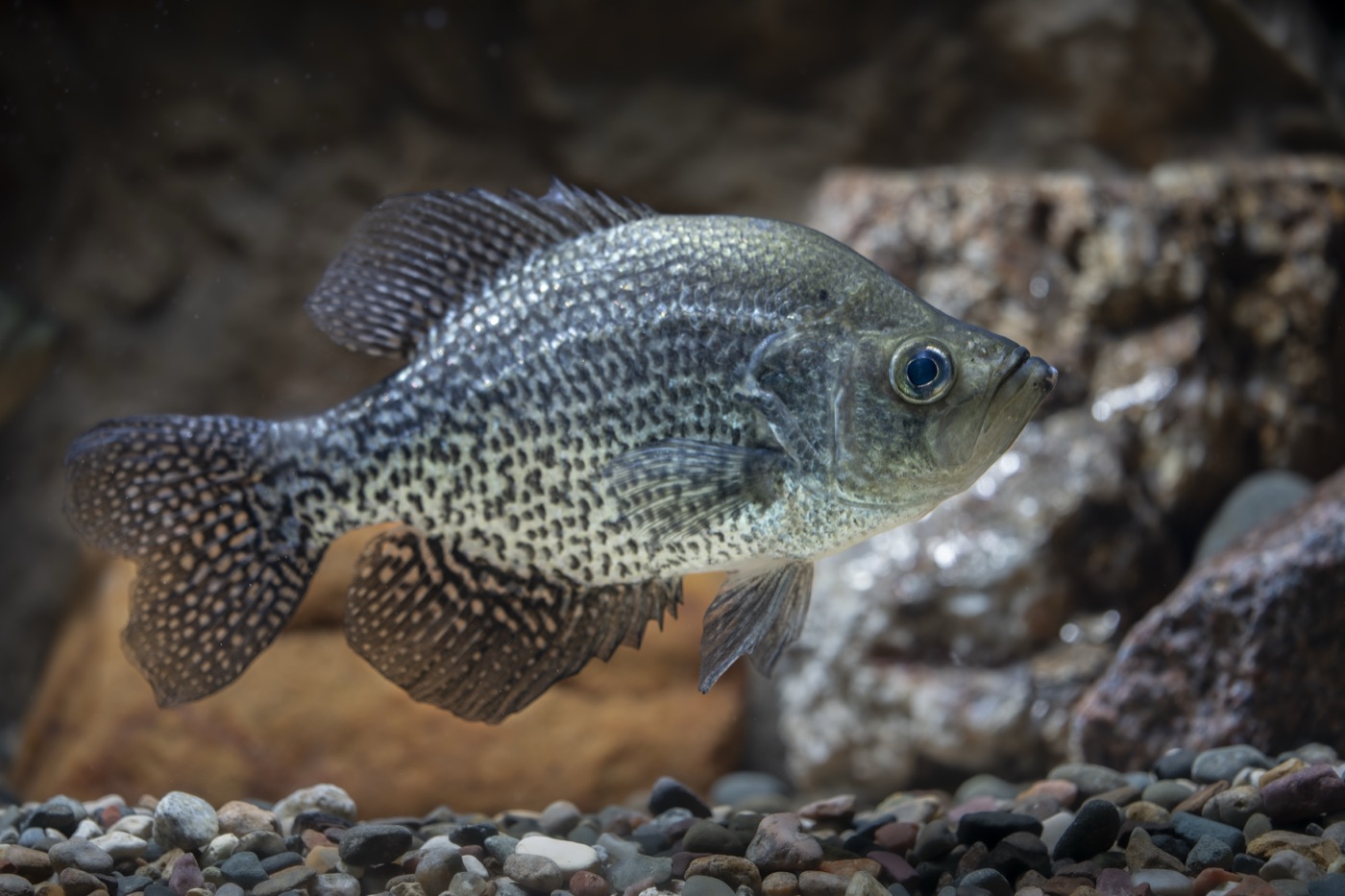
What follows for the angler. All summer, the thermocline told you where to fish: fish concentrated above it, as close to the cool water as the oxygen allowed. Turnover deletes that rule. A crappie that held at 14 feet in August because the water below was dead can now be at 4 feet or 30, and Wisconsin’s DNR describes crappie as moving in response to temperature, oxygen, season and food — all four of which just changed at once. That is why the week of turnover has a reputation for scattered, hard fishing, and why the weeks after it — cool, evenly oxygenated water top to bottom, fish feeding ahead of winter — have the opposite reputation.
Neither agency puts a number on how much fishing slows during the mixing itself. The murk and the circulating low-oxygen water make a slowdown plausible; treat it as a reasonable inference from what they do say, not a finding.
Spring turnover, briefly
Spring turnover is the same process run in reverse. Missouri’s guide: each spring the ice melts, sun and breeze warm the top layer of cold, light water, and when it reaches 39°F it becomes heavier and sinks. The pond achieves uniform temperature and density, the whole volume has good dissolved oxygen, and fish can be found at all depths. Spring turnover tends to pass with less notice than fall’s because it coincides with the pre-spawn movement toward shallow water — see our fish spawning temperatures page for what happens next.
Winter is not a turnover
This is a common confusion worth clearing up. Missouri’s guide describes winter as a second stratification, run upside down: 39°F water at maximum density sits on the bottom, a layer of colder and lighter water forms above it, and the surface freezes. The agency calls it inverse stratification — colder water on top of warmer. Early in winter fish are in the warmer bottom water; as decomposition uses up the oxygen down there, they move higher. Heavy snow on the ice can block the light that would replenish oxygen, which is the mechanism behind a winterkill. Our ice fishing basics page covers the season that follows.
Reading it in your own conditions
Water temperature is the input, and our water temperature page explains where to get it. Dissolved oxygen covers why the bottom layer dies in summer and why turnover revives it, and wind covers the other half of the fall mechanism — Missouri’s guide credits fall winds with eroding the thermocline, which is why a still, warm October can leave a lake unturned longer than the calendar suggests.
Frequently asked questions
What is lake turnover?
Missouri's Department of Conservation defines it in one sentence: turnover is the gentle, natural mixing of pond and lake waters, caused by changing temperatures in surface waters brought on by the progression of the seasons. In a temperate climate most ponds and lakes turn over twice — in fall when surface water cools, and in spring when it warms again. In between, the lake sits in layers that do not readily mix: a warm oxygenated top, a cold bottom, and a thermocline between them. Turnover is the event that erases those layers.
Why does a lake turn over?
Because water changes weight with temperature, and does so in an unusual way. Missouri's Department of Conservation explains that cold water is denser and heavier than warm water, but water is heaviest at 39°F — as it cools further toward 32°F the molecules expand, which is why ice floats. In fall, as surface water cools toward that dense point it becomes heavier than the layer beneath and sinks; fall winds stir the surface layer and gradually erode the thermocline until the whole pond is uniform in density and temperature. That complete mixing is fall turnover. Spring turnover is the same process run forward as the surface warms from ice-out toward 39°F and sinks.
When does fall turnover happen?
Iowa's DNR gives the range for its lakes: usually over the course of a few days from late September to mid-October, when the surface water cools to the point where it is colder than the water below it and sinks. Missouri's Department of Conservation gives the temperature trigger rather than a date — surface waters cooling toward 50°F — and notes the mixing can happen literally overnight. Your lake's date depends on its depth, clarity and the year's weather, which is why the agencies give ranges.
How does turnover affect fishing?
It removes the depth rule that governed summer. Missouri's Department of Conservation says fall turnover opens the entire pond's volume to fish, and they may be found throughout the water column; Iowa's DNR says the same — after turnover, fish use the entire water column. The EPA's dissolved-oxygen factsheet gives the reason: after turnover, temperature and dissolved oxygen are generally the same throughout the lake. During summer, fish were pinned above the thermocline; afterwards they are not. Anglers report slow fishing during the mixing itself, which the agency descriptions make plausible — decaying bottom material and low-oxygen water circulating lake-wide — but neither agency quantifies it.
Can you tell when a lake has turned over?
Sometimes by looking. Missouri's Department of Conservation notes that turnover sometimes leads to noticeable changes in the colour, taste and odour of the water, caused by the pond-wide circulation of decaying organic particles and gases that accumulated in the bottom layer all summer. A lake that was clear last week and murky with a sulphur smell this week, with no rain to explain it, has probably turned. Over the following days the freely circulating water becomes thoroughly oxygenated from surface to bottom, and the smell clears.
Is there a winter turnover too?
No — winter is a second stratification, and it runs upside down. Missouri's Department of Conservation describes water reaching its maximum density at 39°F and settling to the bottom, with a layer of colder, lighter water forming above it that eventually freezes; the agency calls this inverse stratification, with colder water on top of warmer. Early in winter fish are in the warmer water at the bottom; as oxygen is used up down there through the winter they move higher. Spring turnover then mixes it all again once the ice is off and the surface warms to 39°F.
Sources
- Aquaguide: Pond Turnover (Pond Management Series) — Missouri Department of Conservation. Accessed September 25, 2026.
- Pond Turnover — Ponds and Water Quality — Missouri Department of Conservation. Accessed September 25, 2026.
- Fishing the Thermocline for Better Summer Success — Iowa Department of Natural Resources. Accessed September 25, 2026.
- Factsheet on Water Quality Parameters: Dissolved Oxygen — United States Environmental Protection Agency. Accessed September 25, 2026.
- Crappie (PUBL-FM-708), Wisconsin fish species guide — Wisconsin Department of Natural Resources, Bureau of Fisheries Management. Accessed September 25, 2026.
How we choose sources: sources policy.
More in this series
Know when it's worth going.
Fishing Club AI turns live weather, pressure and moon data into a simple bite forecast for your spot — so the skills you practise get used on the right day.
Get the App